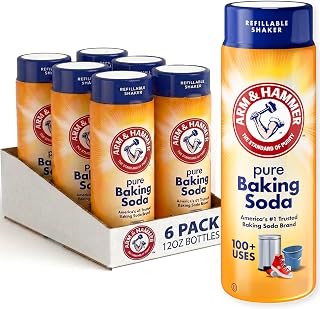
Baking soda, also called sodium bicarbonate, is a leavening agent that reacts with acids in a recipe to make baked goods rise, and it is also widely used for cleaning and deodorising around the home. It differs from baking powder, which already contains its own acid and can rise with only moisture and heat. The first decision is the use, because food grade baking soda for baking is the same chemical as cleaning soda, but large cleaning tubs may not be packed for food use.
For baking, freshness matters. Baking soda loses strength over time, especially once opened in a humid kitchen. Test it by adding a little to vinegar: strong fizzing means it is still active. Recipes with buttermilk, yogurt, lemon juice, brown sugar or cocoa usually call for baking soda, and using too much leaves a bitter, soapy taste.
Package size comes next. Among the 7 products that list size, most fall between 0.9 and 1.6 pounds, and 1 pounds is typical. Small boxes suit occasional bakers, while large bags and tubs are cheaper for frequent baking and household cleaning. Store baking soda in a sealed container in a dry place.
Household uses are worth knowing. An open box absorbs odours in the fridge, a paste cleans sinks and pans, and it can freshen carpets and drains. Use separate packs for food and cleaning so the food box stays clean.
Before buying, check whether the product is labelled for food use, the size, the container, and the date on the pack. Some brands are labelled gluten free, which matters for strict gluten free kitchens where cross contact is a concern. At high altitude, recipes usually call for slightly less leavening, so check the altitude notes in your recipes.
How we list products: every listing here has a recorded price, a minimum customer rating and enough ratings or monthly sales. Generic and unbranded listings are left out; every real brand stays, including brands sold only on Amazon. Products are ordered by the same ProductDome score on every page.Editorial policy

 Best Overall