Trombones come in tenor and bass forms, with either a hand slide or, on some instruments, valves for changing notes. Tenor and bass instruments serve different musical parts, while slide and valve versions require different playing techniques, so establish the instrument your lessons or ensemble require before comparing models. Within that format, the first decision is whether you can comfortably support and operate the instrument in your normal playing position.
Weight matters because holding a trombone while keeping the slide arm free can become tiring during rehearsals. Among the 6 products that list weight, most fall between 2.4 and 20 pounds, and 13 pounds is typical. Before comparing listed weights, establish whether each refers to the assembled instrument, the instrument with its case, or a shipping package. Balance also affects the effort needed to hold the mouthpiece in position; weight alone cannot tell you how an instrument will feel. For a younger player or someone with limited reach, a playing trial should establish whether the required slide positions are accessible without straining or changing posture.
Bore size affects how the instrument responds to your airflow, so use a teacher’s recommendation for your playing level and musical part instead of assuming a larger bore represents an upgrade. An attachment operated by a trigger provides alternate slide positions and access to additional lower notes, but the useful configuration depends on the passages you need to play. Ask which attachment arrangement those parts require. On a slide trombone, smooth travel is essential for accurate movement between notes; a used instrument with dents, binding or worn slide surfaces may need specialist repair before it plays properly.
Before buying, confirm the instrument’s stated pitch and whether the supplied mouthpiece fits its receiver; mouthpiece shanks are not interchangeable across every trombone. Establish whether a mouthpiece and fitted case are supplied or sold separately. The finish filter’s Lacquered and Polished values do not tell you the underlying metal or which surfaces they describe, so consult the construction details. Follow the maker’s care instructions for the slide, any valves and the exterior, particularly when comparing plastic and metal instruments. Confirm which lubricants and cleaning tools are required and whether they come with the instrument.
How we list products: every listing here has a recorded price, a minimum customer rating and enough ratings or monthly sales. Generic and unbranded listings are left out; every real brand stays, including brands sold only on Amazon. Products are ordered by the same ProductDome score on every page.Editorial policy

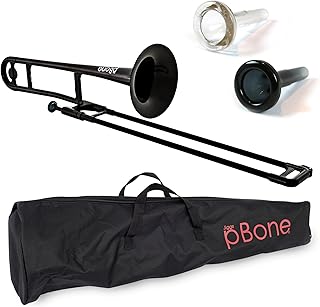 Best Overall


