
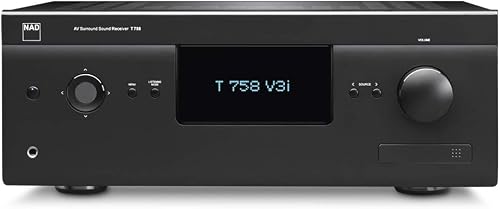
NAD T758 V3i 7.1 Channel AV Receiver
- 7 x 60 watts, 7.1 channel amplification
- Dolby Atmos and DTS:X decoding, via multi-core DSP
- 4K at 60fps with HDR, plus 4:4:4 color and analog-to-HDMI conversion
- Dirac Live room correction built in, no separate processor needed
- BluOS streaming with MQA support, plus AirPlay 2
- 4 HDMI ports, with ARC and Apple HomeKit control
- Modular Design Construction, swappable for future formats
Last refreshed Aug 4, 2026 · Based on the Amazon listing and published specifications, not hands-on testing.
A high-end network receiver built for a dedicated home theater, pairing strong surround decoding with built-in room correction most brands charge extra for. Setup and configuration ask more of the owner than a basic plug-and-play model.
As an Amazon Associate I earn from qualifying purchases. ProductDome earns a commission when you buy through links on this page.
ASIN: B00J5JGNW6Model: T758 V3iCategory: AV Receivers
Overview
A multi-core digital signal processor drives the decoding here, running Dolby Atmos, DTS:X, and DTS Master Audio alongside Dirac Live room correction that measures and adjusts the room before playback. The same chassis also handles ultra high definition video passthrough and converts analog sources to a single HDMI output.
Serious home theater builders get proper object-based surround and automatic room correction without buying a separate processor, along with lossless network streaming through BluOS. Configuration involves more setup steps than a basic receiver, since Dirac calibration and the modular platform both ask for extra attention. Anyone wanting a simple out-of-box experience will find more going on here than expected.
Who it's for
Home theater enthusiasts building a dedicated room around object-based surround formats and measured room correction get the most from this receiver. Casual users wanting a basic switcher with no setup routine should look at a simpler model.
Pros and cons
- Dirac Live room correction built in, no add-on
- Decodes Dolby Atmos and DTS:X natively
- BluOS streaming supports lossless MQA files
- Modular design allows future format upgrades
- Setup and calibration take more time upfront
- HDMI port count is limited for the class
- No listed subwoofer output count
Performance notes
Room correction runs through Dirac Live, which uses a measurement microphone to map reflections and timing across listening positions, then adjusts the receiver's output to compensate before any content plays. Decoding relies on the onboard multi-core processor, which is also what handles simultaneous surround formats without added external hardware.
Specifications
| Brand | NAD |
|---|---|
| Model | T758 V3i |
| Dimensions & fit | |
| Weight | 33.9 poundshigher than 90% of 43 av receivers |
| Power & efficiency | |
| Power | 60 wattslower than 92% of 40 av receivers |
| Construction & materials | |
| Color | Black |
| Compatibility & installation | |
| Connectivity | HDMI |
| Other details | |
| Hdmi Ports | 4 |
| Brand Tech | NAD |
Closest rivals on specs
 Onkyo TX-RZ30 9.2-Channel AV Receiver
- Power 60 vs 100 watts (-40%)
- Weight 33.9 vs 29.3 pounds (+16%)
 Onkyo TX-RZ30 9.2-Channel AV Receiver
- Power 60 vs 170 watts (-65%)
 Yamaha RX-V679BL 7.2 Channel MusicCast Receiver
- Power 60 vs 150 watts (-60%)
- Weight 33.9 vs 26 pounds (+30%)
Frequently asked questions
Does it require external speakers to use Dolby Atmos?
Yes, a compatible surround speaker layout is needed since the receiver only supplies the amplification and decoding, not the speakers themselves.
Can it stream music without a phone or computer connected?
Yes, BluOS lets it pull networked and internet radio sources directly once it is on the same network, without a source device staying connected.
Does Dirac Live need to be run every time the receiver is used?
No, room correction is measured once during setup and applied automatically afterward until the room or speaker positions change.