

Apec Water ROES-PH75 Filtration System
- Filtration System
- Reverse Osmosis
- Under-Sink
- Polypropylene
- Better rated than 68%
- More reviewed than 97%
A reverse osmosis system for buyers who specifically want membrane-level filtration under the sink rather than carbon-only filtering.
As an Amazon Associate, ProductDome may earn a commission from qualifying purchases made through links on this page.
How it ranks among the 65 filtration systems we track
4.6★ across 4,000 Amazon ratings, Bayesian-smoothed toward the category average.
4,000 Amazon ratings, weighted on a log scale so huge counts don't drown everything.
Modest tracked demand last month.
Brand identity, imagery, description and spec coverage.
The ProductDome score is separate from the Amazon rating shown above: it combines the Bayesian-smoothed Amazon rating with evidence volume, tracked demand, and data quality across the 65 filtration systems we track - how the scorecard works · full filtration systems data report. Confidence: high - strong rating volume and complete data.Last refreshed Aug 4, 2026. Data-computed, not a hands-on test. Compiled by the ProductDome Research Team.
Overview
The Apec Water ROES-PH75 is an under-sink reverse osmosis filtration system rated for 75 gallons of production per day, built with polypropylene housings. Reverse osmosis pushes water through a membrane rather than relying on carbon adsorption alone, the main difference from the carbon-only systems and pitchers elsewhere in this catalog.
The 75 in the model name lines up with the 75 gallons-per-day production rating. RO systems like this typically ship as a multi-stage under-sink install with a separate storage tank, so the listed 15.5 x 5.25 x 17.5 inch dimensions likely describe one component rather than the full assembled footprint. Reverse osmosis removes dissolved solids and many contaminants that carbon filtration cannot touch, at the cost of a more involved install and periodic membrane replacement.
- Reverse osmosis purification
- 75 gallons per day production
- Under-sink installation
- Polypropylene housing
Who it's for
Households wanting the broader contaminant reduction of reverse osmosis under the sink, and who are prepared for a multi-stage install rather than a drop-in carbon cartridge.
Strengths and trade-offs
Drawn from this product's published specifications.
- Reverse osmosis removes dissolved solids carbon filters miss
- 75 gallon-per-day production rating
- More involved under-sink install than a single cartridge
- No stated tank or full assembled dimensions
Performance notes
Reverse osmosis forces water through a semi-permeable membrane, which rejects dissolved solids, many heavy metals, and other contaminants that pass straight through carbon-only filters. The 75 gallon-per-day rating describes production capacity, not storage; most RO systems pair with a pressurized tank to hold filtered water between uses.
Specifications
| Brand | Apec Water |
|---|---|
| Model | ROES-PH75 |
| Purification | Reverse Osmosis |
| Install Type | Under-Sink |
| Material | Polypropylene |
| Weight | 1.41 pounds |
| Dimensions | 15.5 × 5.2 × 17.5 inches |
Other Apec Water filtration systems
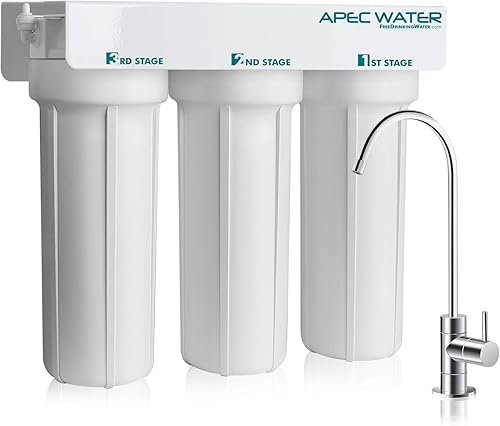
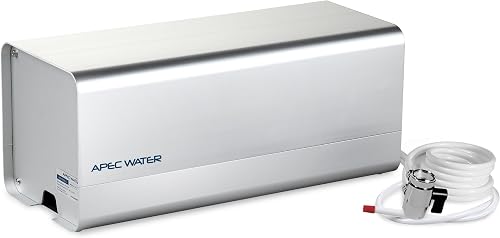

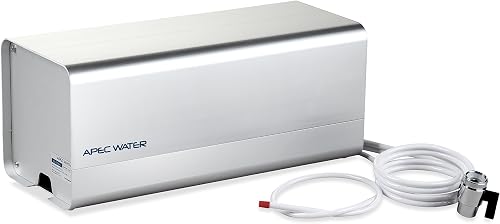
How it compares
This product against the closest alternatives we track in filtration systems.
| Product | Amazon rating | Ratings | ProductDome score |
|---|---|---|---|
| Apec Water ROES-PH75 Filtration SystemThis product | 4.6 / 5 | 4,000 | 4.0 / 5 |
| Waterdrop WD-TSU Filtration SystemWaterdrop | 4.5 / 5 | 3,347 | 4.4 / 5 |
| Aqua Crest AQ-5KDC Filtration SystemAqua Crest | 4.4 / 5 | 1,300 | 4.3 / 5 |
| iSpring RO500AK-BN Filtration SystemiSpring | 4.7 / 5 | 562 | 4.2 / 5 |
| Bluevua A-JSJ-LPD-100UV-BMT Filtration SystemBluevua | 4.4 / 5 | 1,356 | 4.0 / 5 |
Similar filtration systems from other brands


Questions about the Apec Water ROES-PH75
Common buyer questions answered straight from the product spec data - no fluff, no "it depends".
How is this different from a carbon filter pitcher?
It uses reverse osmosis, pushing water through a membrane that removes dissolved solids and many contaminants carbon adsorption alone cannot catch.
What does the 75 gallon-per-day rating mean?
It's the system's production rate, not stored capacity; RO systems typically pair with a separate tank to hold filtered water.
What is it made of?
Polypropylene housings, per the listed material spec.