


ASUS TUF Gaming GeForce RTX 5080 OC Graphics Card 16GB
- Graphics Card Ram: 16 GB
- Graphics Description: NVIDIA GeForce RTX™ 5080
- GPU Series: NVIDIA RTX 50 Series
- Graphics Card Interface: PCI Express x16
Last refreshed Sep 7, 2026 · Based on the Amazon listing and published specifications, not hands-on testing.
A well-built high-end card on paper, with reinforced construction and strong cooling, though buyers should confirm PSU wattage and case clearance since there's no review history yet to lean on.
As an Amazon Associate I earn from qualifying purchases. ProductDome earns a commission when you buy through links on this page.
ASIN: B0DQSMMCSHModel: TUF-RTX5080-O16G-GAMINGCategory: Graphics Cards
Styles Available
Need a different one? Pick on Amazon →
Overview
A GeForce RTX 5080 graphics card in Asus's TUF Gaming line with 16GB of GDDR7 memory, factory overclocked, built on the Blackwell architecture with a 3.6-slot triple-fan cooler.
TUF Gaming is Asus's durability-focused tier, so the emphasis here is reinforced components and a protective PCB coating rather than the styling of Asus's ROG line. It needs a minimum 850W power supply with a 12V-2x6 (12VHPWR) connector, and at 348mm long and 3.6 slots wide, case clearance is worth checking before buying since it's a genuinely large card.
- GeForce RTX 5080, 16GB GDDR7, Blackwell architecture
- 3.6-slot cooler with triple Axial-tech fans
- Requires 850W+ PSU, 12V-2x6 (12VHPWR) connector
- 2700 MHz boost clock, 2730 MHz in OC mode
Who it's for
Suits builders with a spacious case, an 850W or larger PSU, and a want for high-end 4K or high-refresh 1440p gaming performance. Not a fit for compact or small-form-factor builds, or anyone without a PSU that supports the required 12VHPWR connector.
Pros and cons
- 16GB GDDR7 memory for high-end gaming
- Large 3.6-slot cooler with three Axial-tech fans
- Reinforced components and protective PCB coating
- GPU Tweak III software for monitoring and tuning
- Requires an 850W+ PSU with a 12VHPWR connector
- Large 348mm, 3.6-slot size needs a big case
Performance notes
The card runs on Nvidia's Blackwell architecture with DLSS 4 support, and the triple Axial-tech fan array is sized for the 3.6-slot heatsink to move heat off a card drawing meaningfully more power than previous generations. A phase-change thermal pad on the GPU die replaces standard thermal paste, which Asus positions as holding up better under sustained heavy loads. Factory clocks run at 2700 MHz boost by default with a 2730 MHz OC mode available through GPU Tweak III software.
Specifications
| Brand | Asus |
|---|---|
| Model | TUF-RTX5080-O16G-GAMING |
| Dimensions & fit | |
| Item Weight | 5 pounds |
| Item Dimensions L x W | 13.7 × 5.7 inches |
| Compatibility & installation | |
| Graphics Card Interface | PCI Express x16 |
| Compatible Devices | Desktop |
| Included components | |
| Number of Packs | 1 |
| Warranty & support | |
| Warranty Description | 3 years |
| Other details | |
| Graphics Card Ram | 16 GB |
| Graphics Description | NVIDIA GeForce RTX™ 5080 |
| GPU Series | NVIDIA RTX 50 Series |
| Graphics Ram Type | GDDR7 |
| Display Maximum Resolution | 8K |
| Video Processor | NVIDIA |
| Number of Fans | 3 |
| Number of Items | 1 |
| Graphics Coprocessor | NVIDIA GeForce RTX 5080 |
| Antenna Location | Business, Gaming, Personal, Professional |
| Mfr Part Number | TUF-RTX5080-O16G-GAMING |
Closest rivals on specs
 GIGABYTE GeForce RTX 5070 Ti Gaming OC Graphics Card 16GB
- Item Weight 5 vs 3.9 pounds (+28%)
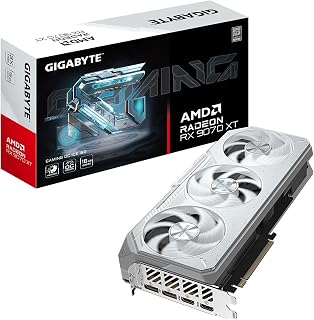 GIGABYTE Radeon RX 9070 XT Gaming OC ICE Graphics Card 16GB
- Item Weight 5 vs 2.8 pounds (+79%)
 ASRock Radeon RX 7700 XT Challenger OC Graphics Card 12GB
- Item Weight 5 vs 2.2 pounds (+127%)
Frequently asked questions
What power supply does this RTX 5080 need?
Asus specifies a minimum 850W PSU with a 16-pin 12V-2x6 (12VHPWR) connector.
How much case clearance does this card need?
It measures 348mm (13.7 inches) long and takes up 3.6 expansion slots, so case clearance should be confirmed before buying.
Does this card come factory overclocked?
Yes, its OC mode runs at 2730 MHz boost versus 2700 MHz in default mode, switchable through GPU Tweak III software.