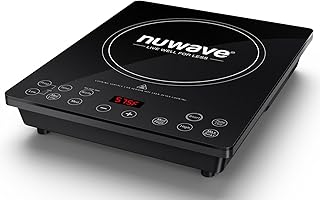
Countertop burners come as compact single-burner units and wider units with multiple cooking positions, so the layout affects how much worktop you give up and where pan handles can sit. Start by deciding what role the burner will play in your kitchen: preparing an entire meal calls for planning each cooking stage, while supplementing a cooker means identifying the task you need the extra cooking position to handle.
For that planned use, check voltage, plug requirements and the combined electrical demand of appliances sharing the circuit, including a kettle or toaster you expect to use during meal preparation. Among the 48 products that list wattage, most fall between 1,000 and 1,800 watts, and 1,800 watts is typical. The wattage filter can narrow your choice by electricity draw, but it cannot tell you how large a pan the burner accommodates or how quickly your meal will cook. Consult the manual for restrictions on extension leads or power strips before planning a temporary cooking station.
Next, establish whether your existing cookware is permitted by the manual, including its construction and base shape. Compare each pan's base diameter with the supported dimensions; a broad rim can conceal a much smaller contact area. If compatible cookware is pictured, check whether it is supplied or sold separately. For sauces, melting and gentle simmering, look for the manual's explanation of the lowest settings and how heat is regulated, including whether it cycles during operation. Knob and Touch describe the controls, but neither label tells you the available adjustment range or whether displayed temperatures are settings or measured readings. For long cooking tasks such as simmering stock, check any maximum operating duration or timer limit, and follow the manual’s supervision requirements.
Before buying, measure the intended position against the appliance dimensions and the manual's clearance requirements around walls, cupboards and ventilation openings. Confirm that the worktop surface is permitted, especially if you plan to use a protective mat that could obstruct airflow. If the burner must be put away after cooking, allow for the manual's cooling instructions before handling or storing it. Check the cleaning instructions for the cooking surface and controls, including any restrictions on tools or cleaning products.
How we list products: every listing here has a recorded price, a minimum customer rating and enough ratings or monthly sales. Generic and unbranded listings are left out; every real brand stays, including brands sold only on Amazon. Products are ordered by monthly searches for their brand and model on every page.Editorial policy


 Best Overall