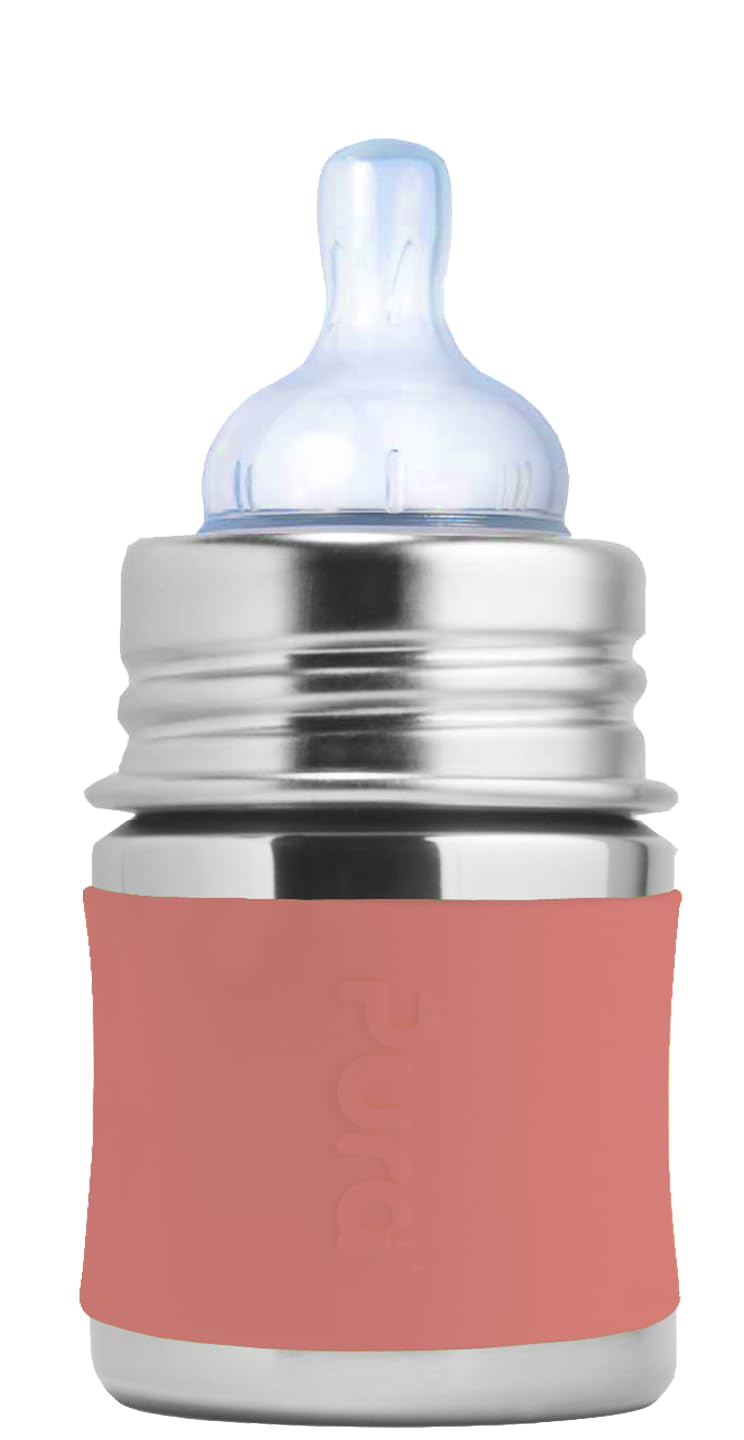
Baby feeding bottles come in glass, plastic, silicone and stainless steel, with different trade-offs in handling, visibility and resistance to breakage. Start with the bottle body: decide how much weight you are comfortable supporting during a feed and whether seeing the milk level through the side matters more than having a flexible or metal container.
For handling, compare the bottle’s empty weight with a bottle you already find comfortable, remembering that milk adds to the load in your hand. Among the 6 products that list item weight, most fall between 0.2 and 1.5 pounds, and 0.3 pounds is typical.. A lighter bottle can reduce the load during longer feeds, but its shape also determines whether you can hold it comfortably at the angle needed for feeding. Look at the neck, body width and grip area in the listing photos; weight cannot tell you whether a broad bottle will sit comfortably in your palm. If you want to read the remaining milk without opening the bottle, look for clear walls and legible markings, and check whether a protective sleeve covers them.
Next, select a nipple using the manufacturer’s feeding guidance, since flow descriptions are not interchangeable across bottle systems. The liquid flow speed filter offers Slow Flow and Slow as search options, but those labels alone cannot tell you how a nipple will perform with the milk you use. Check which nipple is supplied and whether alternative flows are available for that bottle. For capacity, use the marked usable volume and your usual feed amount; leave any mixing space required by the instructions. A vented design adds another choice: inspect the assembly diagram to see whether it uses a nipple vent or separate internal pieces that must be fitted correctly.
Before buying, confirm compatibility with any breast pump or warmer you plan to use, including whether adapters are supplied or sold separately. The care instructions should state which bottle components permit boiling, steam sterilizing or dishwasher cleaning. Narrow openings and internal vent tubes may need dedicated brushes, so check whether these are included. Replacement nipples, seals and vent parts should be available for the exact bottle version, with instructions explaining when worn components need replacing.
How we list products: every listing here has a recorded price, a minimum customer rating and enough ratings or monthly sales. Generic and unbranded listings are left out; every real brand stays, including brands sold only on Amazon. Products are ordered by the same ProductDome score on every page.Editorial policy

 Popular Pick