As an Amazon Associate I earn from qualifying purchases. ProductDome earns a commission when you buy through links on this page.
Best Overall
Baby & Toddler Carriers
Infantino Flip 4-in-1 Convertible Baby Carrier
A reliable, inexpensive carrier for parents who do not need lumbar support or a premium fabric, backed by tens of thousands of largely positive reviews, with sizing that runs a bit generous for the smallest newborns.
A strong newborn-stage pick given how consistently reviewers preferred it over stiffer structured carriers for early daily wear, though comfort reportedly fades as baby nears the top of its weight range.
A practical one-carrier option given the 0-48 month range and four carrying positions, though this listing has no customer reviews yet to confirm long-term comfort.
A light pouch carrier for quick trips with a baby, with a drool bib and a front pocket. It offers only front positions and suits short carries more than long walks.
Worth buying specifically for the newborn window given its low weight ceiling, but expect to move on to a different carrier once baby passes about 6 months or 15 lbs.
A specialized hip seat for the toddler carrying stage rather than a newborn wrap, with a sensible storage setup, though there is no review history yet to confirm how it holds up.
A structured carrier with a built in newborn seat and four carry positions, including facing out and back carry, plus magnetic guided buckles. Weight limits are listed in two units that do not match exactly.
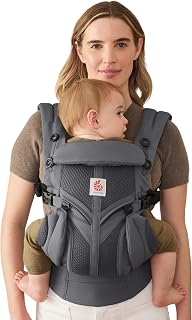
A breathable structured carrier that covers the whole span from newborn to toddler in every carry position. The mesh panel gives little warmth, so cold weather calls for an extra layer.
A cotton multi-position carrier that adjusts from newborn to toddler without an insert and fits a wide range of wearers. Some spec fields are clearly wrong, so rely on the weight range in the bullets.
A soft buckle carrier that adjusts its panel to a newborn or a toddler without swapping inserts, with front and back carry. The listing names no warranty, and its weight range differs between title and specs.
An ultralight ripstop carrier that folds into its own waist pouch for toddlers who walk and want up. It needs head and neck control, so it is not for newborns.
A framed hiking carrier for parents who carry a toddler on trail days and want storage built in. The listing gives no weight limits or carrier weight, so check those before buying.
A ventilated hiking child carrier with an adjustable torso, a machine washable seat and a built-in sunshade for long trail days. It is bulky and heavy compared with soft carriers, so it suits hikes rather than errands.
A light cotton carrier with four positions, an adjustable seat for newborns and crossable straps. Its weight limit is lower than carriers built for bigger toddlers.
A hip seat carrier with six positions that moves baby's weight off the shoulders and onto the hips. Newborn use needs an infant insert, and the listing does not say one is included.
A comfortable all-position carrier for parents who want one cotton carrier from newborn into the toddler years, with lumbar support. The weight of the carrier itself is not listed.
A reasonable no-tie alternative to a traditional wrap for the newborn through early-toddler stage, though there are no customer reviews on this listing yet to confirm fit and durability.
A structured, newborn ready carrier that adjusts through the toddler years with four carry positions and storage pockets. The linen fabric is hand wash only, which adds work after spills.
A small, soft newborn carrier for front carrying that is hip-healthy and simple to put on. Weight limits differ across the listing and it is outgrown within the first year.
A featherweight soft carrier that folds into its own pocket, made for travel, beach days and as a backup to a bulkier carrier. The listing gives conflicting maximum weights, so confirm the limit.
A snug, newborn focused carrier that adjusts to baby size with a visual scale and spreads weight with cross-back straps and lumbar support. Its top weight is low, so expect to outgrow it in the first year.
LILLEbaby Complete All Seasons 6-in-1 Baby Carrier
Among the most consistently praised carriers in this batch, credited by reviewers for solving back pain that competing carriers caused, with a short learning curve on strap adjustment as the only real friction.
These 10 baby & toddler carriers have the highest ProductDome scores among the established products in this category, meaning ones with a large volume of owner ratings and strong evidence; on a tie, the product with more rating evidence ranks first. The score combines owner satisfaction, rating volume, demand and data quality from public Amazon listings (updated 3 days ago). We do not test products ourselves.
What are the most popular baby & toddler carriers brands?
Ergobaby, LILLEbaby, Stokke, Tula, Infantino lead this category among the 21 brands that passed our curation checks.
How does ProductDome pick these baby & toddler carriers?
A listing appears only when it has a recorded price, a minimum customer rating, and enough ratings or monthly sales. Generic and unbranded listings are left out, while every real brand stays, including brands sold only on Amazon. The ones that pass are ordered by the ProductDome score, which weighs owner satisfaction, rating volume, demand and data quality.
About baby & toddler carriers
Baby and toddler carriers hold a child against your body so your hands are free, and they come in four main styles. Soft structured carriers have a padded waist belt and shoulder straps with buckles and suit long walks and older babies, stretchy wraps are a long piece of fabric that suits newborns, ring slings are quick to put on for short trips, and meh dai and hybrid carriers sit between wraps and buckled carriers. The first decision is the baby's age and how long you will carry, because newborns need close, upright support, while toddlers need a carrier that spreads weight onto your hips.
Weight range is the next question. Among the 37 products that list maximum weight recommendation, most fall between 25 and 45 pounds, and 40 pounds is typical. Many carriers start at newborn weight with an insert or an adjustable panel and grow to the toddler years, while others start later and need a separate newborn insert. Check both the minimum and maximum weights and whether an insert is included or sold separately.
Carry positions come next. Front facing in, front facing out, hip and back carries all exist, but not every carrier supports every position, and back carries are usually only for older babies with good head control. Look for a seat that supports the baby's thighs from knee to knee in a natural spread, which is the position hip health groups recommend.
Comfort for the parent matters a lot. A wide, padded waist belt carries weight on the hips, and adjustable straps let parents of different sizes share the carrier. Breathable mesh panels help in warm weather, while cotton, soft and sturdy, suits cooler months.
Before buying, check the weight range, the carry positions, the newborn insert, the adjustment range for different parents and the care instructions. Follow the visible and kissable rule: the baby's face should be visible, the airway clear and the head close enough to kiss.
How we list products: every listing here has a recorded price, a minimum customer rating and enough ratings or monthly sales. Generic and unbranded listings are left out; every real brand stays, including brands sold only on Amazon. Products are ordered by the same ProductDome score on every page.Editorial policy
Cookie settings
We use necessary cookies to keep the site working. Page views are counted without cookies. With your permission, we also use functional and marketing cookies. Cookie Policy.

 Best Overall