
Slant Boards
Folaps Squat Wedge Block with Guide
A lightweight accessory for adjusting squat mechanics, not a replacement for mobility work itself.
- Size
- Not specified
- Material
- Polyester
- Warranty Description
- 45 days
- Item Weight
- 2.2 pounds
 USUnited States
As an Amazon Associate I earn from qualifying purchases. ProductDome earns a commission when you buy through links on this page.
A lightweight accessory for adjusting squat mechanics, not a replacement for mobility work itself.
 Popular Pick
A simple wood slant board for calf and ankle stretching, a low-cost addition to a warm up or mobility routine.

A wood slant board rated to 200 pounds, mislabeled in its category as a leg exerciser but functionally a static stretching incline.
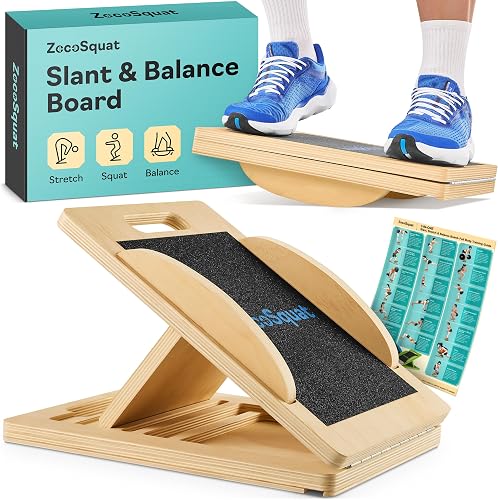
A solidly built wood slant board rated to 300 pounds, good for calf and ankle work if a single fixed angle suits your routine.

A lightweight wooden slant board for calf, Achilles and ankle stretching work, rated to hold users up to 300 pounds during a held stretch.
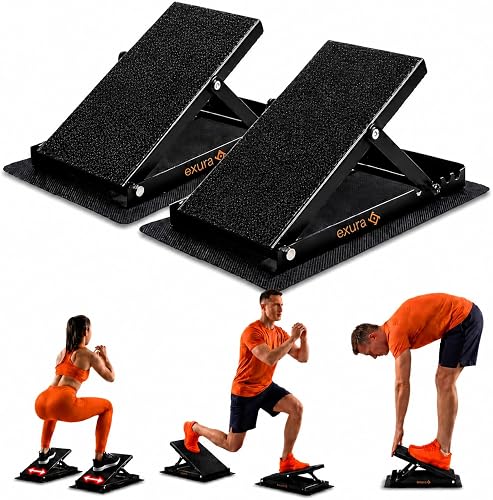
A straightforward metal slant board for calf and ankle stretching, sized for home use rather than a commercial studio floor.

A lightweight squat riser with a high load rating, useful for heel-elevated squats if the fixed size fits your needs.

A simple, single piece wood leg exerciser from Slant, best suited to basic stretching use given the lack of published capacity or angle specs.
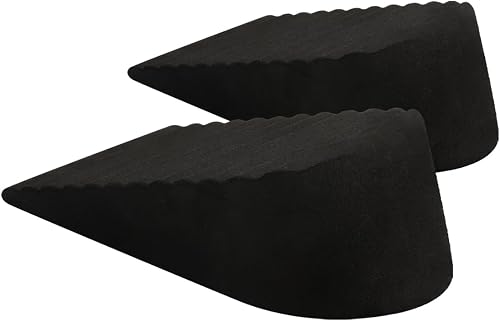
A lightweight EVA wedge for lifters working around ankle mobility limits in the squat, sized as an accessory rather than a loaded platform.
As an Amazon Associate I earn from qualifying purchases.
Squat, Folaps, EXURA lead this category among the 4 brands that passed our curation checks.
A listing appears only when it has a recorded price, a minimum customer rating, and enough ratings or monthly sales. Generic and unbranded listings are left out, while every real brand stays, including brands sold only on Amazon. The ones that pass are ordered by the ProductDome score, which weighs owner satisfaction, rating volume, demand and data quality.
Slant boards are inclined platforms used for calf and ankle stretches, physiotherapy exercises and squats with raised heels. The first decision is adjustability, because adjustable boards change the angle for different stretches and progress over time, while fixed boards are simpler and cheaper.
Stability and grip are the next questions. Non slip surfaces and rubber feet keep the board in place, and a sturdy frame supports body weight. Among the 8 products that list item weight, most fall between 0.8 and 7 pounds, and 3.4 pounds is typical.
Uses vary. Physiotherapists use slant boards for heel pain, tight calves and knee rehabilitation, and lifters use them for heel elevated squats.
Wooden boards look smart and feel solid, while plastic boards are light and easy to carry. Some boards have a heel stop or a textured surface for extra grip during calf raises and stretches. Wider boards suit people with larger feet and give more room for squats. Slant boards are often used daily, so choose one that fits easily beside a desk or in a cupboard for regular use. Clean the surface regularly so it keeps its grip.
Before buying, check the angle settings, the size, the weight limit, the surface and whether it folds for storage. Start with gentle angles and short holds, and ask a physiotherapist if you have an injury.
How we list products: every listing here has a recorded price, a minimum customer rating and enough ratings or monthly sales. Generic and unbranded listings are left out; every real brand stays, including brands sold only on Amazon. Products are ordered by the same ProductDome score on every page.Editorial policy