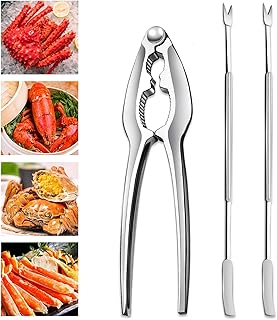
Nutcracking tools come as handheld squeeze crackers, screw presses and tabletop lever designs. For the same nut, squeeze crackers apply pressure through your grip, screw presses advance by turning a handle, and tabletop levers use a longer handle to apply force. Start with how you want to work: cracking a few nuts directly over a bowl calls for different handling than working through a batch at a table, especially if repeated squeezing is uncomfortable.
For occasional use, a handheld cracker saves you setting out a larger mechanism, but its handle spacing and grip shape need to suit your hand while holding a nut. For longer sessions, compare the turning motion of a screw press with the downward stroke of a tabletop lever; either may be preferable to repeated squeezing, depending on your wrist and hand comfort. If you will move the cracker between a cupboard and the table each time, its listed weight deserves attention. Among the 8 products that list item weight, most fall between 0.3 and 2 pounds, and 0.6 pounds is typical. Check the individual tool’s weight to judge how much you will lift, and its dimensions to see whether it fits your storage space.
Next, match the jaw opening or cracking chamber to the nuts you actually buy. A recess that cannot hold a small nut securely can let it slip, while a large shell may not fit at all; look for explicit guidance on suitable nuts, particularly for very hard shells. If you want intact kernel halves for baking or serving, look for a mechanism that lets you increase pressure gradually and stop as the shell gives way. Shell containment is a separate choice: an enclosed cracking chamber or a supplied shield can help direct fragments, but inspect the openings to see where pieces can escape.
For a clamp-mounted cracker, check that the clamp fits your table edge and thickness. For a screw-mounted design, confirm whether installation requires drilling into the mounting surface. Check whether the required hardware is included. An Aluminum or Stainless Steel label may describe the body, jaws or another component, so identify which parts it covers and follow the cleaning instructions for the assembled tool. Shell debris can collect around hinges and inside cracking chambers; check how those areas are accessed and whether washing, soaking or dishwasher cleaning is permitted. If you need picks to free kernels from shell crevices, confirm whether they are included or sold separately.
How we list products: every listing here has a recorded price, a minimum customer rating and enough ratings or monthly sales. Generic and unbranded listings are left out; every real brand stays, including brands sold only on Amazon. Products are ordered by the same ProductDome score on every page.Editorial policy

 Best Overall