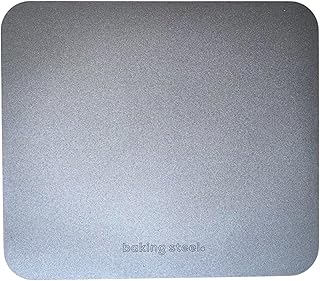
Pizza pans hold the dough as it bakes, while stones and baking steels provide a surface that is usually preheated before the pizza goes on. A pan lets you assemble and carry the pizza in its baking vessel; a preheated stone or steel typically requires transferring the dough onto a hot surface. Start by deciding whether you want that transfer step in your cooking routine, particularly if you make pizzas with soft dough or generous toppings.
Across pans, stones and steels, weight affects how comfortably you can move your bakeware between the oven and storage. Among the 5 products that list item weight, most fall between 0.9 and 12 pounds, and 1.6 pounds is typical. A heavier piece can be awkward to lift out of a low oven, so compare its listed weight with cookware you comfortably handle. If you prefer a preheated surface, steel generally transfers heat to dough faster than stone, which can promote faster underside browning; results depend on thickness, oven settings and technique. Follow the maker’s preheating guidance, and allow for differences in dough thickness and topping moisture when judging advertised baking times.
Choose the shape around the pizzas you make: Round suits circular dough, while Rectangular can accommodate an oblong pizza or smaller pizzas arranged together, depending on its usable dimensions. Pan depth is a separate choice. Raised sides support deeper dough and contain toppings, while a shallow rim gives easier access beneath a thin crust. For pans, a perforated base exposes parts of the underside directly to oven heat; a solid base contains oil and loose ingredients. Very soft dough can catch in openings, so compare the base design with the dough you plan to bake.
Before buying, compare the full outside dimensions, including handles, with your oven rack and the manufacturer’s required clearances. Confirm that the pan, stone or steel permits your intended oven temperature, grill use or broiler exposure. If you choose a stone or steel, check whether a peel is included or whether you will need a separate tool to load and retrieve the pizza. Cleaning instructions also differ: some stones require hand cleaning and thorough drying, while some metal surfaces need seasoning or protection from prolonged moisture. Confirm the care requirements for the exact baking surface and any coating.
How we list products: every listing here has a recorded price, a minimum customer rating and enough ratings or monthly sales. Generic and unbranded listings are left out; every real brand stays, including brands sold only on Amazon. Products are ordered by the same ProductDome score on every page.Editorial policy

 Best Overall