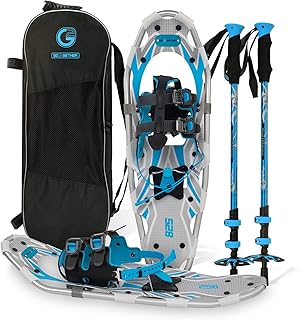
Snowshoes built for gentle trails tend to prioritize an easy walking stride, while designs intended for steep terrain put more emphasis on traction and support during climbs. Running designs favor a compact shape for a quicker stride, so they are not an automatic substitute for walking snowshoes in deep powder. Start by choosing enough flotation for your total carried load and the snow you expect to cross.
Use your weight in winter clothing, including boots and a loaded pack, when comparing the maker’s load guidance. Among the 6 products that list maximum weight recommendation, most fall between 0.5 and 271 pounds, and 133 pounds is typical. Treat that recommendation as a starting point: soft, unconsolidated snow generally calls for more supporting area than a packed trail under the same load. A larger deck can reduce sinking, but extra length and width can make tight turns and narrow tracks more awkward. The size filter’s Large and Medium labels cannot resolve that trade-off; compare actual deck dimensions and the maker’s sizing guidance for your load and snow conditions.
Next, match the underside traction to the route. For rolling trails, look for traction positioned to help with both climbing and braking on descents; for traverses across slopes, inspect whether the design also provides edges or rails that resist sideways slipping. A heel lift can reduce calf strain on sustained uphill sections, but adds little to a mostly level walk. Binding fit is a separate decision: the binding must accommodate your intended winter boots and hold the heel securely while allowing the walking motion described by the maker. Buckle and Hook & Loop closure labels do not tell you the adjustment range or how easily the fastening operates with gloves.
Before buying, confirm that the listing contains a pair of complete snowshoes: replacement Bindings and Poles are separate items, and pictured poles or carrying bags may be sold separately. Where the material filter says Aluminum or Oxford, identify the component described, since the frame, decking and carrying bag have different jobs. For upkeep, consult the instructions for drying the bindings and metal traction parts before storage, and establish whether worn straps or damaged buckles can be replaced and whether those replacement parts are available separately.
How we list products: every listing here has a recorded price, a minimum customer rating and enough ratings or monthly sales. Generic and unbranded listings are left out; every real brand stays, including brands sold only on Amazon. Products are ordered by the same ProductDome score on every page.Editorial policy

 Best Overall