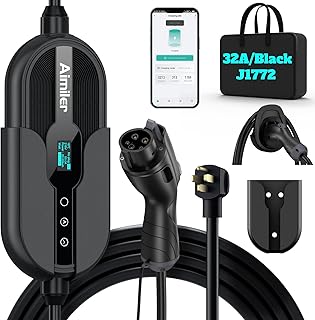
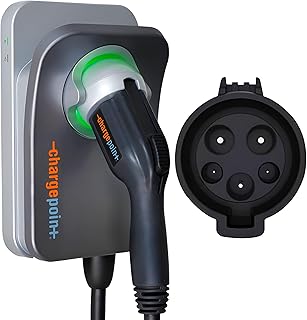
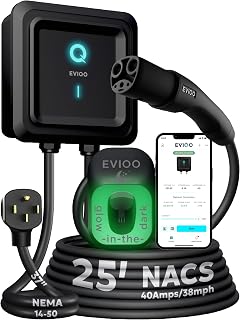
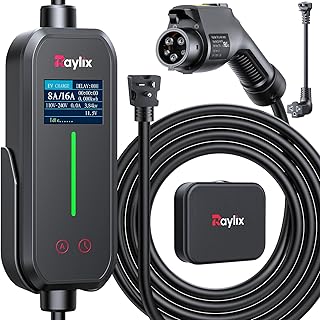
Electric vehicle charging stations come in hardwired and plug-in forms: a hardwired unit connects directly to the electrical wiring, while a plug-in unit can be disconnected at its receptacle. Start with the installation your parking space can support, because a plug-in station still needs a suitable electrical supply and a matching receptacle. Charging Station Accessories may include cable holders or mounting parts, so distinguish those purchases from the station that supplies power to the vehicle.
Have an electrician assess the available supply, circuit requirements and electrical capacity before settling on either connection method. Among the 19 products that list input voltage, most fall between 216 and 240 volts, and 240 volts is typical.. Match the station’s specified input voltage to the supply at the installation point; a plug that appears to fit is insufficient evidence of suitability. For a plug-in station, establish whether an existing receptacle and its circuit meet the manufacturer’s requirements. For a hardwired station, account for the wiring route from the electrical panel to the parking space. If available capacity is tight, ask whether the station supports a suitable load management arrangement and whether the required monitoring equipment is supplied or sold separately. The amperage and current rating filters cannot tell you whether the proposed installation will work.
Next, match the charging connector to your vehicle’s inlet, including any manufacturer-permitted adapter and whether it is supplied or sold separately. Choose cable length by the route from the proposed mounting point to the charge port in your usual parking position, allowing for the cable to pass around the vehicle without crossing a walkway. For scheduled charging, decide whether the vehicle’s own timer covers your needs before paying for connected controls. If you need remote access or shared-driver controls, establish which functions require a network connection, an account or a subscription, and whether charging remains available when that connection fails.
Before buying, confirm that the station is permitted for the intended indoor or outdoor location, including the exposure of its electrical connection. Compare the manufacturer’s mounting clearances and cable-storage requirements with the available wall space. Establish whether mounting hardware and a connector holder are included. For long-term upkeep, check the permitted cleaning method and whether a damaged charging cable can be replaced separately or requires replacement of the station.
How we list products: every listing here has a recorded price, a minimum customer rating and enough ratings or monthly sales. Generic and unbranded listings are left out; every real brand stays, including brands sold only on Amazon. Products are ordered by the same ProductDome score on every page.Editorial policy

 Best Overall