As an Amazon Associate I earn from qualifying purchases. ProductDome earns a commission when you buy through links on this page.
Best Overall
Dehumidifiers
Eva-Dry E-333 Wireless Mini Dehumidifier
A rechargeable, cordless mini dehumidifier for enclosed spaces up to 333 cubic feet, using silica gel beads that dry out for reuse instead of a disposable tub.
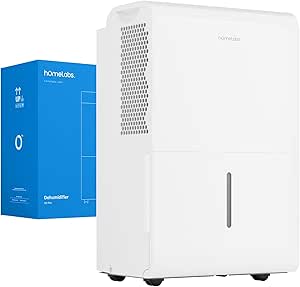
A large-capacity, Energy Star basement or whole-room dehumidifier worth considering if you plan to run the drain hose rather than empty the tank by hand.
A portable, quiet 1000 sq ft dehumidifier worth it for anyone who wants a low-speed sleep setting under 30 dB, though it is misfiled as a parts and accessories item.
A rugged, hose-drained dehumidifier built for crawl spaces, basements and commercial rooms that need constant moisture control. It has no bucket at all, so it needs a drain point or pump route nearby.
Dehumidification Capacity
113 pints per day at saturation, 53 pints per day at AHAM
A low, horizontal crawl space dehumidifier with gravity drainage and high airflow for large damp areas. It has no pump, so the drain must run downhill.
A whole-home crawl space dehumidifier that ships with a pump, hanging kit and duct collars for a DIY install. It is large and heavy, so plan the mounting carefully.
These 10 dehumidifiers have the highest ProductDome scores among the established products in this category, meaning ones with a large volume of owner ratings and strong evidence; on a tie, the product with more rating evidence ranks first. The score combines owner satisfaction, rating volume, demand and data quality from public Amazon listings (updated 3 days ago). We do not test products ourselves.
Aprilaire, Eva-Dry, Alorair, Moiswell, Midea lead this category among the 26 brands that passed our curation checks.
How does ProductDome pick these dehumidifiers?
A listing appears only when it has a recorded price, a minimum customer rating, and enough ratings or monthly sales. Generic and unbranded listings are left out, while every real brand stays, including brands sold only on Amazon. The ones that pass are ordered by the ProductDome score, which weighs owner satisfaction, rating volume, demand and data quality.
About dehumidifiers
Dehumidifiers come as portable powered units, installed systems for connected spaces, and moisture absorbers for small enclosed areas such as cupboards. Powered units remove moisture for collection or drainage; moisture absorbers use moisture-binding media and are generally unsuitable for a persistently damp room. Start with the space you need to dry, its usual temperature and how damp it gets. An air purifier addresses airborne particles, so it is not a substitute when condensation or excess humidity is the problem.
For a powered unit, match moisture removal to those room conditions. Compressor models condense moisture on cold coils, while powered desiccant models use moisture-binding material and can suit cooler spaces; compare each unit’s permitted operating temperatures with the coldest conditions where it will run. Among the 37 products that list dehumidification capacity, most fall between 9.1 and 1,280 fl oz, and 797 fl oz is typical. Verify each listing’s reporting period before comparing extraction figures. Advertised extraction depends on temperature and humidity, so compare performance stated under similar conditions and expect removal to change as the room dries. Frequent laundry drying creates an ongoing moisture load, so look for extraction guidance that covers drying laundry in a space like yours. Distinguish extraction from tank volume: a larger collection tank holds more water between emptying visits but does not itself mean faster drying.
Decide how you will dispose of collected water before choosing controls. Manual emptying suits accessible locations where you can carry a filled tank; check for tank-full shutoff so collection stops when the tank fills. Continuous operation without manual emptying requires suitable drainage. Gravity drainage needs a hose route that falls towards the drain, while pumping requires checking the permitted lift and whether the pump and hose are supplied or sold separately. For changing humidity through the day, look for an adjustable humidity target and automatic cycling. The number of speeds filter indicates how many settings you can select; for bedroom use, compare the listing’s noise information at the setting you expect to run while sleeping.
Before buying, compare the unit’s dimensions and required intake and exhaust clearances with its intended position. For a ducted installation, check connection compatibility; follow the manual’s electrical requirements for any installed system. Material filter values such as Plastic and Metal do not identify which components they describe; consult the listing for component details. Check tank accessibility and which parts can be removed for cleaning. For upkeep, establish whether the air filter is washable or replaceable and how the tank can be cleaned. With moisture absorbers, confirm whether the media needs replacement or regeneration, what that process requires, and whether the initial media and subsequent refills are supplied or sold separately.
How we list products: every listing here has a recorded price, a minimum customer rating and enough ratings or monthly sales. Generic and unbranded listings are left out; every real brand stays, including brands sold only on Amazon. Products are ordered by the same ProductDome score on every page.Editorial policy
Cookie settings
We use necessary cookies to keep the site working. Page views are counted without cookies. With your permission, we also use functional and marketing cookies. Cookie Policy.

 Best Overall