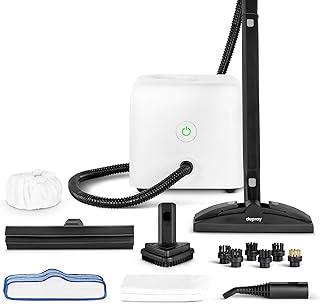
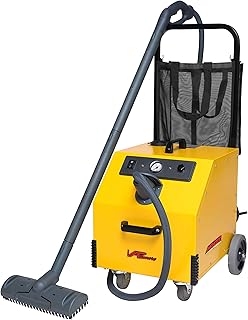
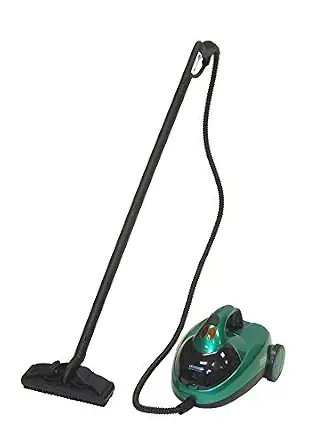
Steam cleaners range from compact handheld units, whose water tank you carry in your hand, to larger machines that feed steam from a separate body through a hose; some handheld units also accept hoses. If floors are your main task, distinguish a multipurpose steam cleaner with a floor attachment from a steam mop, which is built around floor cleaning and may lack detachable detail tools. Start by deciding which surfaces you intend to clean, because permission to use steam matters before any performance specification.
Look for explicit steam-cleaning guidance from the maker of your flooring, worktop or fixture, then compare it with the cleaner’s permitted uses. Some finishes, adhesives and moisture-sensitive materials can be damaged by heat or water, so a sealed surface should not automatically be treated as steam-safe. Among the 19 products that list maximum temperature, most fall between 210 and 303 °f, and 230 °f is typical. The maximum temperature filter helps narrow the advertised temperature the machine can reach, but check where that temperature is measured. A boiler temperature is not necessarily the temperature delivered at the surface, which can change with the attachment and distance. A higher advertised maximum is not permission to clean a more delicate finish.
For longer cleaning sessions, compare usable water capacity and the refill procedure against the amount of work you expect to finish between stops. Some pressurized tanks must cool and depressurize before opening; advertised runtime also varies with steam output and intermittent trigger use. Choose attachments suited to your tasks: a floor head for larger areas and a detail nozzle or brush for joints and edges, subject to the cleaner’s approved uses. Establish whether each attachment is supplied or sold separately. Most steam cleaners do not suction up dirty water; loosened dirt must be collected with a cloth attachment or wiped away. If you need suction, check explicitly for an extraction function.
Before buying, compare the hose and wand reach with the height and depth of the areas you need to access. Wattage describes electrical draw; check the manual for the required voltage and any restrictions on extension cords. For upkeep, read the manual’s water requirements and descaling instructions before planning to add any treatment to the tank. Establish how reusable cloths should be washed, and whether replacement cloths, brushes and pressure-cap seals are available for the exact machine.
How we list products: every listing here has a recorded price, a minimum customer rating and enough ratings or monthly sales. Generic and unbranded listings are left out; every real brand stays, including brands sold only on Amazon. Products are ordered by the same ProductDome score on every page.Editorial policy

 Best Overall