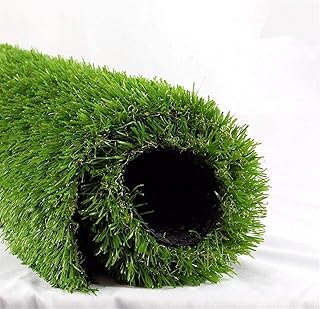
Artificial grass comes in rolls, finished mats and interlocking tiles. Compare roll widths with your space to minimise joins, choose mats for a defined patch, and consider tiles for individually replaceable sections. Start by deciding whether you need a removable covering or an installation secured in place, because that determines the backing, edge treatment and preparation your space needs.
For a removable patch, look for a backing suited to the floor beneath it and edges that lie flat where people walk. For a fixed installation, follow the supplier’s requirements for the base and fastening method; grass laid over uneven ground can retain those bumps and hollows. Measure the area against the supplied piece dimensions, allowing for trimming and joins, and keep the blade direction consistent across adjoining pieces to avoid visibly different shading. Among the 12 products that list item weight, most fall between 0.2 and 4.7 pounds, and 3.1 pounds is typical. Use item weight to judge handling when lifting the supplied piece for storage or cleaning; it cannot tell you its coverage or thickness.
Match drainage to what will land on the grass. Rain and pet urine need a route through the backing and away from the surface beneath, so drainage holes alone cannot resolve standing water on a solid base. For pet use, look for instructions covering urine rinsing and waste removal. Compare pile height and density together: longer blades can look lush, but sparse turf may still show its backing. Longer piles may need more brushing after foot traffic, while shorter piles make small debris easier to reach. For sunny seating or play areas, plan for shade, since artificial grass can become uncomfortable underfoot.
Before buying, check the product description for suitability for sunlight exposure and weather: the usage filter lists Indoor, Outdoor as a combined value and Indoor as a separate value. The Plastic and Polypropylene material values leave the component unclear, so identify what the blades and backing are made from. For secured installations, establish whether seam tape, adhesive, edging or fixing pins are required and whether they are supplied or sold separately. Finally, check whether the grass needs infill, which infill the supplier permits, and how it must be replenished during upkeep.
How we list products: every listing here has a recorded price, a minimum customer rating and enough ratings or monthly sales. Generic and unbranded listings are left out; every real brand stays, including brands sold only on Amazon. Products are ordered by monthly searches for their brand and model on every page.Editorial policy