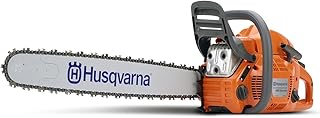
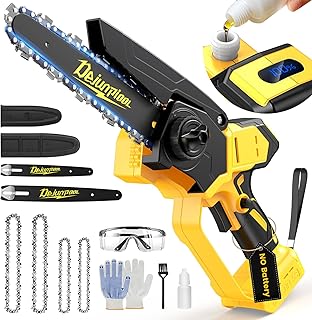
Chainsaws range from compact pruning saws for small branches to larger saws for cutting logs and heavier limbs; the first decision is how much saw your regular cutting actually requires. Start with the size of the branches and logs you normally cut.
Use the chain length filter as a starting point for maneuverability, then confirm the actual guide bar length in the listing. Among the 16 products that list chain length, most fall between 6 and 18 inches, and 9 inches is typical. A shorter guide bar is easier to position in crowded growth, while a longer bar extends farther across a log but needs more clearance around the cut. Check any manufacturer guidance on cutting capacity against the branches and logs you normally handle; advertised length alone cannot tell you whether a saw suits those tasks. Weight matters alongside reach: compare ready-to-cut weights, including the battery or fuel where applicable, because a bare-tool figure understates what you will hold. For repeated pruning, assess the handle arrangement and prescribed grip as well as the listed weight; compact dimensions do not make one-handed operation appropriate.
Choose the power source around where and how long you cut. Corded electric saws suit work within an approved outdoor extension lead’s reach, but routing the lead clear of the cutting area adds a constraint. Battery saws remove that tether, though runtime changes with wood hardness, cut size and battery capacity; for extended sessions, check whether a compatible spare battery and charger are supplied or sold separately. Petrol saws allow refueling away from electrical power, with engine servicing and the specified fuel preparation becoming part of ownership. Also compare chain adjustment systems: frequent cutting makes accessible tension adjustment useful, but tool-free adjustment still requires the tension checks described in the manual.
Before buying, check the manufacturer’s intended uses and whether the saw has a chain brake, hand guards and a start lockout; safety features vary, particularly on compact pruning saws. Establish which protective equipment the manual requires and whether any is supplied. For upkeep, check whether chain lubrication uses a reservoir or requires direct oil application, and whether suitable chain oil is included. Replacement chains must match the saw’s specified pitch, gauge and drive-link count, so confirm those details and replacement availability before relying on a chain-length description.
How we list products: every listing here has a recorded price, a minimum customer rating and enough ratings or monthly sales. Generic and unbranded listings are left out; every real brand stays, including brands sold only on Amazon. Products are ordered by monthly searches for their brand and model on every page.Editorial policy


 Best Overall