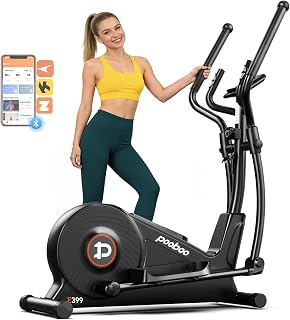
Elliptical trainers come as standing machines for upright exercise and compact seated units that let you pedal from a chair. For compact units, confirm whether the pedals offer resistance you work against, powered assistance, or both; similar-looking leg exercisers may move your feet for you instead of requiring active pedaling. Start by deciding which posture you want, then focus on whether the pedal path suits your natural movement.
Stride length needs to be read in the context of that choice, since this category includes both seated and standing products. Among the 43 products that list maximum stride length, most fall between 6.4 and 20 inches, and 15 inches is typical. For standing exercise, a poorly matched stride can feel cramped or make you reach uncomfortably. Use that measurement alongside the pedal spacing and the shape of the motion: a short, steep path feels different from a longer, flatter sweep. An adjustable stride is useful when people with different natural strides share the trainer, but compare its adjustment span with each person's comfortable movement. For seated use, assess pedal travel from your intended chair position, since a standing machine's stride measurement is not a useful target for movement beneath a desk.
The number of resistance levels filter tells you how many settings you can select, but it cannot tell you how gentle the starting resistance feels or how demanding the highest setting becomes. Look for the listing's description of the resistance mechanism and adjustment method, especially if you want to change effort during a session without stopping. On standing trainers, moving handles let you involve your arms, while fixed grips provide a handhold when you want to focus on pedaling; compare their reach with your comfortable arm position. If guided workouts matter, distinguish programs that change resistance automatically from displays that show a target for you to follow.
Before buying, confirm that the manual permits your intended seated or standing use and that the maximum user weight covers the person exercising. Compare assembled dimensions with your exercise space, allowing for pedal and handle travel beyond the frame and ceiling clearance above the highest standing pedal position. Seated setups need knee clearance beneath the desk and a chair that stays put while pedaling. For powered controls or assistance, check the required supply and whether the adapter is included. A material filter value such as Alloy Steel or Plastic leaves the component unclear, so identify which parts the listing describes. If the trainer must be put away after exercise, compare its weight with what you can move and confirm whether transport wheels or a folding mechanism are provided, including the folded dimensions and clearance needed along the route to storage.
How we list products: every listing here has a recorded price, a minimum customer rating and enough ratings or monthly sales. Generic and unbranded listings are left out; every real brand stays, including brands sold only on Amazon. Products are ordered by monthly searches for their brand and model on every page.Editorial policy