 Best Overall
Tennis Balls
Penn Championship Extra Duty Tennis Balls 2 Cans
- Material Type
- Plastic
- Ball Type
- Not specified
- Item Weight
- 0.9 pounds
- Color
- Yellow
 USUnited States
As an Amazon Associate I earn from qualifying purchases. ProductDome earns a commission when you buy through links on this page.
Best Overall Popular Pick
A USTA and ITF approved, Grand Slam-affiliated ball with Extra Duty felt built for hard-court tournament and recreational play.

A dependable, USTA-official ball for clay and soft court play, with real second life as a household knot-roller and dryer ball.

A dependable all-court ball approved for competitive play, with durable felt and numbered balls. One can goes quickly for regular players.
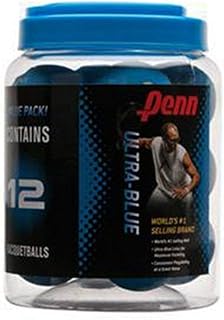
A bulk 12-pack of Penn's high-visibility, high-bounce racquetball, positioned as the category's top seller by sales volume.
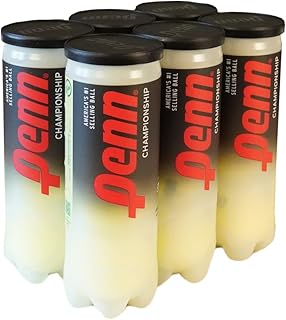
A USTA League-approved, Extra Duty ball built for hard courts, with the interlocked felt aimed at longer wear than a standard cover.

A standard extra duty, tournament-approved ball suited to hard court play, sold in a single 3-ball can.


An 18-ball mesh bag of pressureless balls built to hold their bounce for practice, machines, and casual play rather than match competition.
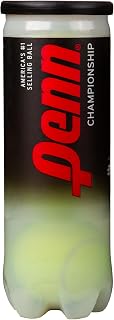


A club-level training ball sold in pressurized cans, well liked for durability in both tennis drills and dog fetch, with one reviewer noting it falls a step short of Wilson.

A mid range pressurized ball for club and recreational play on any court surface. It is not pitched as a tournament ball, and durability figures are not listed.

A well-rated bulk 12-pack that suits practice sessions and pet fetch, with a listed bounce a touch higher than smaller training-ball sets.

A properly staged orange ball for kids moving from red to green in USTA progression, sized for controlled rallies rather than adult-pace hitting.

A mid-size pressureless bulk pack that should hold its bounce in storage better than pressurized cans once opened, built for machines and pets rather than match play.

A budget 12-ball practice and pet bundle with a carry bag, not a certified performance ball for league play.


A properly sized, deeply slowed starter ball for the youngest beginners, not a general purpose tennis ball.

A sensible first ball for young children learning on a short court, since it bounces low and moves slowly. Ball count and exact diameter are missing from the listing.

A visibility-focused bulk pack of high-color tennis balls suited to casual practice and fetch, though it carries the smallest review base of the bulk options here.

A reasonable low-cost bundle for casual hitting, ball-machine drills, or dog fetch, though it is not a substitute for regulation balls in competitive or league play.

A bulk case of Wilson's US Open extra duty ball for buyers who need volume rather than a single can.
As an Amazon Associate I earn from qualifying purchases.
Penn Championship Extra Duty Tennis Balls 2 CansWILSON Championship Tennis BallsPenn Championship Regular Duty Tennis BallsWilson Profile All Court Tennis BallsPenn Ultra Blue Racquetballs 12 PackPenn Championship Extra Duty Tennis BallsWilson US Open Tennis BallsPenn Coach Teaching Tennis BallsTourna Mesh Carry Bag of 18 Tennis BallsPenn Championship High Altitude Tennis Balls 1 CanThese 10 tennis balls have the highest ProductDome scores among the established products in this category, meaning ones with a large volume of owner ratings and strong evidence; on a tie, the product with more rating evidence ranks first. The score combines owner satisfaction, rating volume, demand and data quality from public Amazon listings (updated 3 days ago). We do not test products ourselves.
Wilson, Penn, DUNLOP, Do It Tennis, Dunlop lead this category among the 16 brands that passed our curation checks.
A listing appears only when it has a recorded price, a minimum customer rating, and enough ratings or monthly sales. Generic and unbranded listings are left out, while every real brand stays, including brands sold only on Amazon. The ones that pass are ordered by the ProductDome score, which weighs owner satisfaction, rating volume, demand and data quality.
Tennis balls come in standard full-speed versions and slower training versions, which give learners more time to reach the ball and prepare a stroke. Start by deciding whether you need balls for full-court play or for a lesson format with a specified ball stage and court size; a practice ball is not necessarily a slower ball.
For lessons, follow the coach’s requested stage: red, orange and green training balls are intended for different stages of progression, and colour alone can be misleading when a listing also offers decorative colours. Look for an explicit training-stage description and reduced-speed designation. Among the 7 products that list item diameter, most fall between 2.5 and 6.8 inches, and 2.6 inches is typical.. Diameter by itself cannot tell you the intended playing stage, bounce or suitability for a lesson. If the listed dimensions seem unexpected, establish whether they describe an individual ball or its packaging before using them to narrow your choice. For full-speed games, look for an explicit standard-play description so you do not accidentally order reduced-speed training balls.
For standard play, pressurised versus pressureless construction affects how a supply holds up between sessions. Pressurised balls lose internal pressure over time after opening, so a large supply makes sense when you will use it promptly. Pressureless balls avoid that particular loss, but their felt still wears and their impact feel can differ from pressurised balls. For repeated basket drills, decide whether longer service or matching the feel of your usual match ball matters more. Match the felt specification to your court as well: extra-duty felt generally suits abrasive hard courts, while regular-duty felt generally suits clay and softer surfaces. Follow any surface restrictions stated by your court operator.
Before ordering balls for a ball machine, consult its manual for permitted ball construction and condition; machine compatibility should be explicit, especially for training balls. For organised competition, confirm the event’s ball requirements before buying a bulk supply. Read the package contents to distinguish cans, loose balls and refill packs, and establish whether any pictured carrying bag or collection container is supplied or sold separately. For pressurised stock, confirm that the balls arrive in factory-sealed pressurised cans.
How we list products: every listing here has a recorded price, a minimum customer rating and enough ratings or monthly sales. Generic and unbranded listings are left out; every real brand stays, including brands sold only on Amazon. Products are ordered by the same ProductDome score on every page.Editorial policy