 Popular Pick
Japanese Pull Saws
RUITOOL Japanese Double Edge Pull Saw 6 Inch
- Blade Length
- 6 inches
- Surface Recommendation
- Wood
- Handle Material
- Beechwood
- Power Source
- Corded Electric
 USUnited States
As an Amazon Associate I earn from qualifying purchases. ProductDome earns a commission when you buy through links on this page.
Popular Pick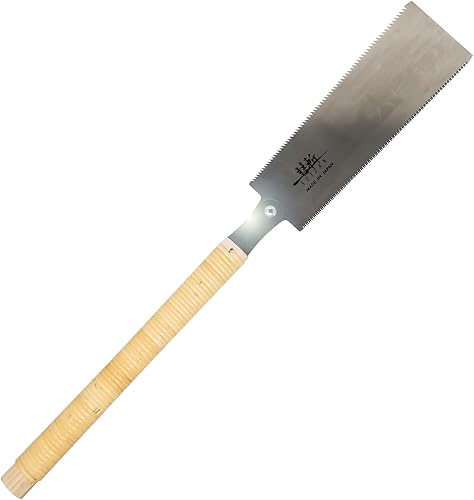
A well-reviewed Japanese steel hand saw sized for general cutting work, backed by a 4.8 average across nearly 9,700 ratings.
 Best Overall
A double edged Japanese pull saw with rip and crosscut teeth for joinery and sizing boards, made in Japan. Blade length and teeth per inch are not listed in the specs.
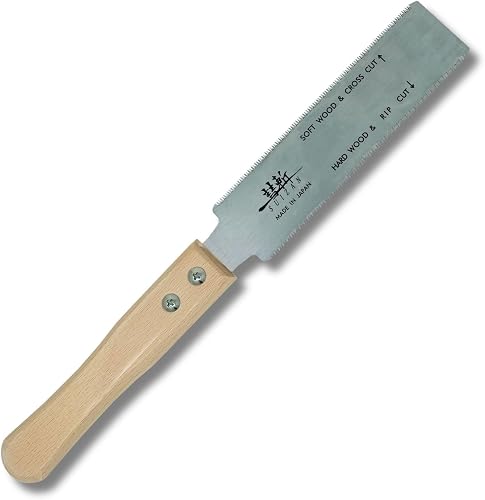
A light, 150mm Japanese steel pull saw with a wood handle, rated 4.8 across 6,000 reviews, aimed at precision cutting rather than volume work.
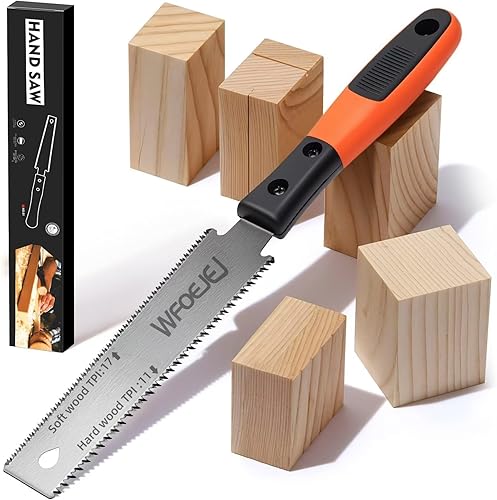
With no spec details published, it isn't possible to say from the data alone what this tool does or who it suits, despite its strong overall rating.

A carbon steel head and wood handle at 11.8 inches, backed by a 4.5 rating across 1,287 reviews, gives the GARTOL HS-2P a solid track record, though its exact function is not stated in the listing.

A light, general purpose Japanese pull saw from Gyokucho, built with a 9.5 inch high speed steel blade and a wood handle for control.

A lightweight SK5 steel Japanese pull saw with a double edge blade, built for precise, detail-focused cuts rather than heavy lumber work.

A 10 inch SK5 steel hand tool with a TPE grip, useful once its exact function is confirmed against the listing images.

Solid stated materials, high carbon steel and beechwood, but the exact tool function is unclear from the data available.
As an Amazon Associate I earn from qualifying purchases.
RUITOOL Japanese Double Edge Pull Saw 6 InchSUIZAN SR-001 Ryoba Japanese Pull Saw 9.5 InchModel SR-001SUIZAN Ryoba Double Edge Pull Saw 6 InchModel SFL-002GARTOL HS-2P Japanese Pull Saw Set 2 PieceModel HS-2PThese 4 japanese pull saws have the highest ProductDome scores among the established products in this category, meaning ones with a large volume of owner ratings and strong evidence; on a tie, the product with more rating evidence ranks first. The score combines owner satisfaction, rating volume, demand and data quality from public Amazon listings (updated 3 days ago). We do not test products ourselves.
SUIZAN, Gyokucho, Temple Tool, WORKPRO, RUITOOL lead this category among the 9 brands that passed our curation checks.
A listing appears only when it has a recorded price, a minimum customer rating, and enough ratings or monthly sales. Generic and unbranded listings are left out, while every real brand stays, including brands sold only on Amazon. The ones that pass are ordered by the ProductDome score, which weighs owner satisfaction, rating volume, demand and data quality.
Japanese pull saws cut on the pull stroke rather than the push, which lets them use a thin blade and a narrow kerf that leaves very little waste. They come as ryoba saws with rip teeth on one edge and crosscut teeth on the other, dozuki saws with a stiffening spine for fine joinery, and flush cut saws with a flexible blade for trimming dowels and plugs. The first decision is the cut you make most, because each pattern is made for a different job.
For general carpentry and garden work, a ryoba gives you two saws in one blade and handles both rip and crosscut. For dovetails, tenons and other fine joints, a dozuki with a spine cuts straight and accurate but its depth is limited by the spine. Flush cut saws have no set on the teeth, so they leave no marks on the surface beside the cut. Among the 7 products that list blade length, most fall between 6 and 9.7 inches, and 6 inches is typical.
Blade replacement and handle are the next questions. Many Japanese saws use replaceable blades because the fine, hardened teeth are hard to resharpen at home, so check whether spare blades are sold for your handle. Handles in wood or plastic, and in different shapes, differ mainly in comfort, and a long straight handle lets you hold the saw with two hands for long cuts.
Before buying, check the blade type, the teeth per inch for the material you cut, the blade thickness, and whether a spare blade or sheath is included. Use light pressure on the pull stroke and let the teeth do the work; pushing hard or twisting kinks the thin blade. Protect the teeth with the sheath when the saw is not in use.
How we list products: every listing here has a recorded price, a minimum customer rating and enough ratings or monthly sales. Generic and unbranded listings are left out; every real brand stays, including brands sold only on Amazon. Products are ordered by the same ProductDome score on every page.Editorial policy