As an Amazon Associate I earn from qualifying purchases. ProductDome earns a commission when you buy through links on this page.
Best Overall
Speakers
SVS Prime Center Speaker
A single wired center channel built for a larger multi-speaker system, not a standalone soundbar replacement.
Driver Size
5.2 inches
Speaker Type
Center Channel
Connectivity
Wired
Mounting
Tabletop Mount
Speakers
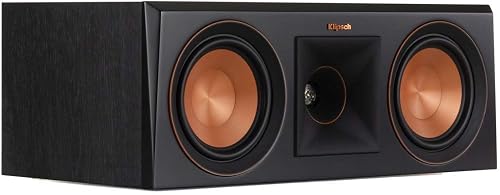
Klipsch RP-504C II Speaker
A wired, tabletop center channel for home theater setups that need clearer dialogue reproduction alongside existing front and surround speakers.
Driver Size
5.2 inches
Speaker Type
Center Channel
Connectivity
Wired
Mounting
Tabletop Mount
Speakers
SVS Prime Satellite Speakers
A finish-forward satellite speaker for filling out surround channels, worth it once you've confirmed quantity and amp pairing with the seller.
Driver Size
4.5 inches
Speaker Type
Satellite
Connectivity
Wi-Fi
Mounting
Ceiling Mount, Wall Mount
Speakers
Klipsch Reference R-25C Center Channel Speaker
Model: KL1060677
A floor-standing center-channel speaker for home theater setups with room to spare near the screen, not a slim under-TV design.
Driver Size
5.2 inches
Speaker Type
Center Channel
Connectivity
Wired
Mounting
Floor Standing
Speakers
Klipsch RP-504C Reference Premiere Center Channel Speaker
Model: 1065810
A sizeable Klipsch center channel built for dedicated home theater use, not a plug and play soundbar substitute.
Driver Size
5.2 inches
Speaker Type
Center Channel
Connectivity
Coaxial
Mounting
Wall Mount
Speakers
Klipsch R-52C Center Channel Speaker
This listing carries the Klipsch name and a 4.8 rating from 3,000 buyers but no spec sheet, so confirm placement and driver details elsewhere before ordering.
Driver Size
—Not specified
Speaker Type
Center Channel, Woofer
Connectivity
—Not specified
Mounting
—Not specified
Speakers
Klipsch RP-500C Center Channel Speaker
Model: 1065819
A compact, wall-mountable Klipsch center channel for home theaters without console space for a tabletop speaker.
Driver Size
5.2 inches
Speaker Type
Center Channel, Tweeter, Woofer
Connectivity
Verkabelt
Mounting
Wall Mount
Speakers
Klipsch RP-500C II Center Channel Speaker
A dedicated Klipsch center channel built for home theater dialogue, made to sit on a shelf or TV stand rather than mount to a wall.
Driver Size
5.2 inches
Speaker Type
Center Channel
Connectivity
Single Binding Posts
Mounting
Tabletop Mount
Speakers
Sony SA-RS3S Wireless Rear Speakers
This compact, wall-mountable pair works well for filling out rear surround channels, pairing most naturally with a Sony receiver setup.
Driver Size
5 inches
Speaker Type
Wireless Rear Speakers
Connectivity
Wired
Mounting
Wall Mount
Speakers
Klipsch RP-404C Center Channel Speaker
Model: 1065813
A large, wired ebony center channel with a 4.8 star average over 221 ratings, a solid dialogue anchor for a receiver-driven home theater setup.
Driver Size
4 inches
Speaker Type
Center Channel
Connectivity
Wired
Mounting
Tabletop Mount
Speakers
Klipsch RP-404C II Speaker
As a center channel, the RP-404C II only makes sense alongside a matching Klipsch RP series surround system, not as a standalone speaker.
Driver Size
4 inches
Speaker Type
Center Channel
Connectivity
Single Aluminum Binding Posts
Mounting
Tabletop Mount
Speakers
Klipsch R-30C Center Channel Speaker
A tabletop speaker whose wide, flat shape suits placement below a screen rather than on stands.
Driver Size
3.5 inches
Speaker Type
Component
Connectivity
RCA
Mounting
Tabletop Mount
Speakers
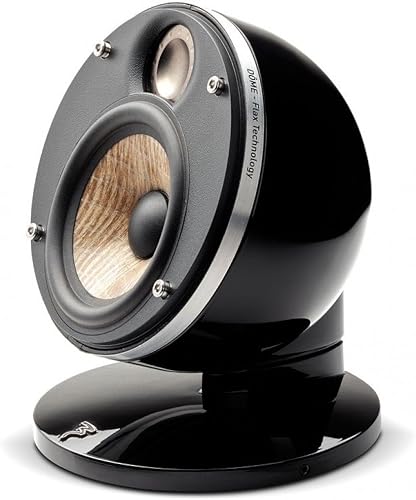
Focal Dome Flax 2-Way Satellite Speaker
Model: DOME10FB
A flexible architectural speaker for ceiling, wall, or satellite placement, best suited to a planned custom install rather than a quick standalone setup.
Driver Size
—Not specified
Speaker Type
In Ceiling, In Wall, Satellite
Connectivity
Wired
Mounting
Ceiling Mount, Wall Mount
Speakers
Cerwin Vega Mobile SL5M Speaker
A wall-mounted tweeter with a 5.25 inch driver, meant to pair with other speakers in a system rather than stand alone.
Driver Size
5.2 inches
Speaker Type
Tweeter
Connectivity
Ethernet
Mounting
Wall Mount
Speakers
Klipsch Reference R-50M Bookshelf Speakers
A pair of horn-loaded bookshelf speakers for clear, detailed stereo or home theater from a shelf or stand. Cabinet dimensions are missing, so measure your shelf space before buying.
This Elac model earns its place as the center-channel anchor in a wired home theater setup, not as a standalone or wireless speaker for casual listening around the house.
Driver Size
7.6 inches
Speaker Type
Center Channel
Connectivity
Wired
Mounting
Tabletop Mount
Speakers
Acoustic Audio by Goldwood PSC-43 Speaker
This PSC-43 works best filling a center or bookshelf slot in a larger receiver-based setup.
Driver Size
4 inches
Speaker Type
Bookshelf, Center Channel
Connectivity
Aux
Mounting
Shelf Mount
Speakers
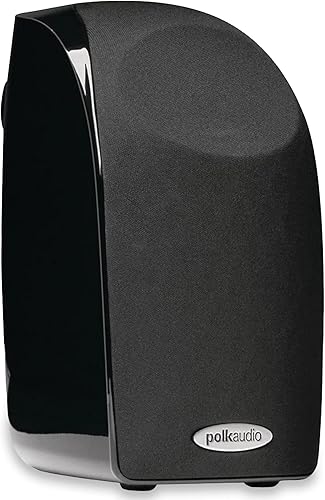
Polk Audio TL 1 Satellite Speaker
Model: TL1
Filling a surround slot is where the TL 1 belongs, compact and optical-connected for placement flexibility.
A black in ceiling satellite with a small 3 inch driver and binding post wiring, reasonable for filling out a ceiling speaker zone rather than anchoring a main stereo pair.
Driver Size
3 inches
Speaker Type
Satellite
Connectivity
Binding Post
Mounting
In Ceiling
Speakers
Acoustic Audio by Goldwood PSC-32 Speaker
For a shelf-mount center or bookshelf speaker that pairs with a receiver over RCA, the PSC-32 holds a 4.3-star rating across 260 reviews.
Driver Size
3 inches
Speaker Type
Bookshelf, Center Channel
Connectivity
RCA
Mounting
Shelf Mount
Speakers
BIC America DV-62CLRS Center Channel Speaker
Model: DV62CLR-S
A shelf mounted center channel built for dialogue clarity in a home theater; pair it with other speakers rather than expecting it to cover bass or stereo width.
Driver Size
6.5 inches
Speaker Type
Center Channel
Connectivity
—Not specified
Mounting
Shelf Mount
Speakers
Fluance Signature HFC Center Channel Speaker
A wired 5 inch center channel speaker with wall-mount hardware, built for dialogue duty in a wired home theater system rather than standalone or wireless use.
Driver Size
5 inches
Speaker Type
Center Channel
Connectivity
Wired
Mounting
Wall Mount
Speakers
JBL Professional Control 52-WH Satellite Speaker Pair
A small, mountable satellite speaker built to extend an existing sound system rather than serve as a primary speaker on its own.
Driver Size
2.5 inches
Speaker Type
Satellite
Connectivity
Aux
Mounting
Surface Mount
Speakers
Klipsch R-620F Floorstanding Speaker
A horn-loaded tower speaker with twin woofers for lively music and home theater in a living room. It is sold as a single speaker and needs an amplifier or receiver to drive it.
Klipsch, Elac, JBL, MartinLogan, Dayton Audio lead this category among the 22 brands that passed our curation checks.
How does ProductDome pick these speakers?
A listing appears only when it has a recorded price, a minimum customer rating, and enough ratings or monthly sales. Generic and unbranded listings are left out, while every real brand stays, including brands sold only on Amazon. The ones that pass are ordered by how many people search for that brand and model each month; review counts only break ties.
About speakers
Speakers come in compact cabinets that need a shelf, stand or bracket, and floorstanding cabinets that occupy floor space. Cabinet format alone cannot establish bass capability, so start by deciding where each cabinet can go around the screen and seating, including whether you have room for its supports.
The driver is the sound-producing component, and its diameter is not the enclosure width. Among the 35 products that list driver size, most fall between 3 and 6 inches, and 5.2 inches is typical. A smaller driver may suggest a compact cabinet, but verify its full dimensions before choosing. Compare its width, height and depth with the available space, allowing the rear clearance specified in the manual and room for terminals and connected cables. A cabinet beneath the television must leave the picture and remote sensor unobstructed. For brackets or stands, compare the speaker’s weight and attachment points with the support’s stated limits, and establish whether the required mounting hardware is supplied or sold separately.
For deep movie bass, examine the speaker’s stated low-frequency extension and the conditions attached to that specification when deciding whether to add a subwoofer. Look for how much output falls at the stated lower limit; a frequency endpoint without that context is a weak basis for comparing speakers. When adding speakers to an existing surround setup, look for manufacturer guidance on pairing them with your front speakers, because changes in tonal character can make voices and effects sound different as they move across the room. For seating spread across a wide sofa, look for guidance on listening angle and cabinet orientation, since sound can change away from the central seat.
Before buying, establish whether each speaker is passive and needs external amplification or powered with amplification built in. Passive speakers require an amplifier or receiver suitable for their stated impedance and recommended amplifier power; powered speakers need inputs that accept your television’s or receiver’s available audio output. If narrowing the speaker type filter to Center Channel or Satellite, read the listing and manual for the intended system connections. Check whether the listing includes a single speaker, a pair or a larger set, and whether amplification is included. Confirm that the necessary speaker wire or signal cables are supplied or sold separately.
How we list products: every listing here has a recorded price, a minimum customer rating and enough ratings or monthly sales. Generic and unbranded listings are left out; every real brand stays, including brands sold only on Amazon. Products are ordered by monthly searches for their brand and model on every page.Editorial policy
Cookie settings
We use necessary cookies to keep the site working. Page views are counted without cookies. With your permission, we also use functional and marketing cookies. Cookie Policy.


 Best Overall