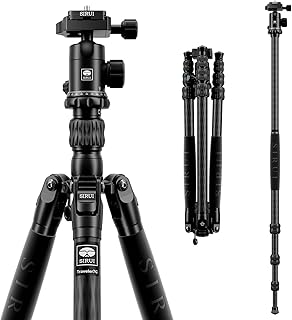
Camera tripods hold a camera, phone or scope steady for long exposures, video, time lapses and group photos, and they range from small tabletop tripods to full size travel and studio tripods. The first decision is the camera weight and the kind of shooting you do, because a light travel tripod that is fine for a phone or mirrorless camera can shake with a heavy lens in the wind.
Height and folded length are the next questions. Among the 10 products that list maximum height, most fall between 62 and 74 inches, and 70 inches is typical. A tripod that reaches eye level without raising the centre column is steadier, since the column is the least stable part. Folded length decides whether the tripod fits in a carry on bag or straps to a backpack. More leg sections make a shorter folded length but take longer to set up and can be less rigid.
Leg material and load are next. Carbon fiber legs are lighter and damp vibration better, while aluminium legs cost less but are heavier and colder to touch in winter. Check the stated load capacity against your heaviest camera and lens with a margin. Leg locks with twist or flip designs differ in speed and feel.
The head decides how you aim the camera. Ball heads are quick and compact for photos, while pan and tilt and fluid heads give smooth movement for video. A quick release plate compatible with your other gear saves time.
Before buying, check the maximum and minimum height, the folded length, the weight, the load rating, the head type, the quick release system, and whether a carrying bag is included. Hang a bag from the centre hook for extra stability in wind.
How we list products: every listing here has a recorded price, a minimum customer rating and enough ratings or monthly sales. Generic and unbranded listings are left out; every real brand stays, including brands sold only on Amazon. Products are ordered by the same ProductDome score on every page.Editorial policy

 Best Overall