As an Amazon Associate I earn from qualifying purchases. ProductDome earns a commission when you buy through links on this page.
Best Overall
Solar Panels
TACTACAM Reveal Solar Panel for Trail Cameras
A sensible add-on for Reveal camera owners tired of swapping batteries in the field. The limitation is that only Reveal models get a matching cable in the box, so other brands need their own lead.
A folding solar charger for hunters running Tactacam Reveal or Defend cameras who want fewer battery trips. Mounting hardware is not mentioned, so plan how it will attach.
A tidy power add-on for Tactacam Defend and Reveal cameras that need charge through the night as well as the day. Panel wattage is not given, so performance under heavy shade is unclear.
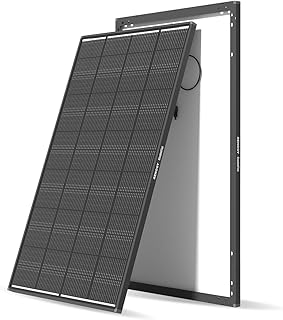
A 200 watt panel built specifically to keep producing power under partial shade, with a smaller footprint than comparable PERC panels and a long output warranty behind it.
Jackery SolarSaga Bifacial Portable Solar Panel 200W
Model: SolarSaga 200W
A high output folding panel for Jackery Explorer owners who camp or draw power on a roof. It is a panel only, so a compatible power station is needed to store the energy.
A folding, weatherproof panel for campers who already own gear with a matching input to charge. Voltage, current and efficiency figures are missing, so sizing it into a battery system takes extra checking.
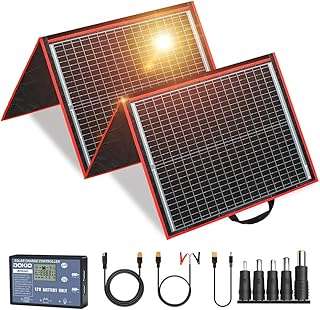
A tidy all-in-one power source for trail cameras and feeders in the field, with several output voltages on one unit. Panel wattage is not stated, so charging speed is hard to judge.
A compact, separately-controlled 150W panel for charging 12V batteries and power stations on the move, worth it once you have confirmed your device's solar input limit.
A 2-pack of 4W solar panels with 10 foot cables and a rotating mounting bracket, built to trickle-charge compatible Ring Stick Up and Spotlight Cam battery models and similar cameras like the Reolink Argus Pro.
EverExceed SP-L4BL Solar Panel for Blink Camera 4W
A purpose-built solar charger for the Blink Outdoor 4 (4th gen) camera only, worth it if that is your exact model and you want to stop swapping batteries.
A complete 200W monocrystalline kit with mounting hardware and a 30A PWM controller included, sized for RV and off-grid charging rather than a larger fixed installation.
Renogy RPP200EF Portable Foldable Solar Panel 200W
Model: RPP200EF-SE
A lightweight, IP65-rated folding panel with above-average cell efficiency and direct USB or MC4 output, built for RV, camping and blackout use rather than permanent installation.
A foldable panel whose 5-connector cable and 3 direct-charge ports make it a practical match for a range of existing power stations, provided you first confirm your station's input limit against its 100 watt rating.
An IP68 waterproof 2-pack of 2.4W solar panels with 180-degree brackets and 13 foot cables, built for compatible Ring battery cameras like Stick Up and Spotlight Cam, not wired or doorbell models.
Buyers running these on high-traffic Blink cameras report months between battery swaps, making this a dependable fix, though the plug connection is worth double-checking after mounting.
Tactacam, Renogy, RENOGY REGO, Callsun, FlexSolar lead this category among the 23 brands that passed our curation checks.
How does ProductDome pick these solar panels?
A listing appears only when it has a recorded price, a minimum customer rating, and enough ratings or monthly sales. Generic and unbranded listings are left out, while every real brand stays, including brands sold only on Amazon. The ones that pass are ordered by how many people search for that brand and model each month; review counts only break ties.
About solar panels
Solar panels come as rigid framed panels for mounting, folding panels that pack away between charging sessions, and flexible panels that can follow a permitted curve. A rigid frame needs space for its fixed shape; folding designs need room when opened; flexible designs need a supporting surface that meets the maker’s instructions. Start with the equipment you intend to charge, because the panel must suit its electrical input before its physical format matters.
Use the receiving device’s manual to identify its permitted solar input, then compare that with the panel’s full electrical specifications. Among the 25 products that list output voltage, most fall between 5 and 23 volts, and 12 volts is typical. A listed output voltage cannot settle compatibility by itself: the panel’s operating voltage, open-circuit voltage and current must meet the receiving equipment’s requirements, including any cold-weather voltage allowance. Connector labels such as USB, MC4 and Solar Connector also leave details unresolved; confirm the exact connection, polarity and any required charging protocol. For a battery connection, establish whether a charge controller is required and whether it supports the battery’s chemistry. A panel alone may lack the regulation needed for that connection.
Next, size the charging setup around what your equipment consumes between opportunities to recharge, using the equipment’s energy-use figures and the panel maker’s expected yield for your location and season. Advertised maximum power reflects stated test conditions; cloud, shade, panel temperature and angle to the sun change actual output, so that figure alone cannot predict a charging time. Assess whether the intended position receives unobstructed sunlight during the hours you need it. If you expect to add panels later, establish whether the receiving equipment permits expansion and which wiring arrangement it supports before committing to a setup.
Before buying, compare the panel’s dimensions and mounting points with the available installation area, allowing the ventilation and clearances specified in its manual. For flexible panels, confirm the permitted bend and attachment method; for folding panels, establish whether a stand is supplied or sold separately. Outdoor suitability must cover the panel, junction box and exposed connections, with particular attention to whether unattended or permanent installation is permitted. Establish whether mounting hardware, cables, adapters and any required controller are included or separate purchases. Finish by checking the permitted cleaning method and whether damaged cables can be replaced separately.
How we list products: every listing here has a recorded price, a minimum customer rating and enough ratings or monthly sales. Generic and unbranded listings are left out; every real brand stays, including brands sold only on Amazon. Products are ordered by monthly searches for their brand and model on every page.Editorial policy
Cookie settings
We use necessary cookies to keep the site working. Page views are counted without cookies. With your permission, we also use functional and marketing cookies. Cookie Policy.


 Best Overall