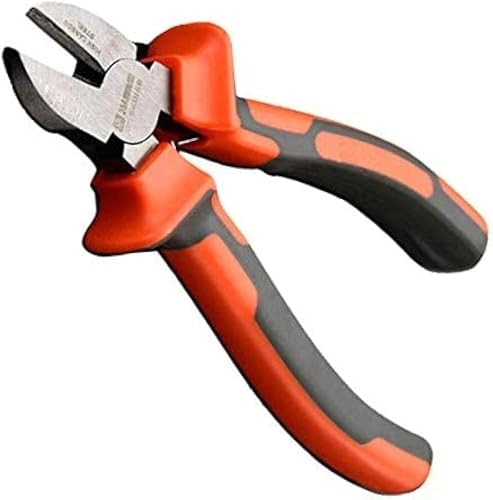
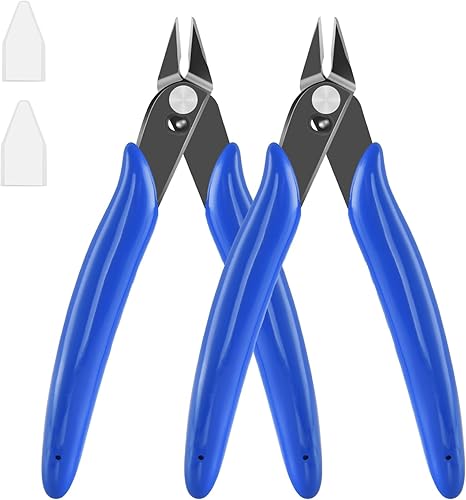
Wire and cable cutters cover the everyday cutting tools for electrical wire, small cable and soft metal wire, including diagonal cutters, flush cutters for electronics and small cable shears. They differ from heavy cable cutters, which shear thick stranded cable, and from bolt cutters for hardened steel. The first decision is the type of wire you cut most, because flush cutters for circuit boards are delicate, while diagonal cutters handle household wiring.
Blade and jaw shape decide the cut. Flush cutters leave a flat end on component leads, while bevelled diagonal cutters are stronger but leave a pointed end. Some cutters have a stripping notch or a crimping section, which saves carrying a second tool.
Hardened wire is the most common way to ruin a cutter. Piano wire, spring steel and nails chip normal blades, so look for a rating for hard wire if you need it.
Before buying, check the cutting capacity for soft and hard wire, the blade type, the handle insulation if you work near live circuits, and whether a spring opens the jaws. Wear eye protection, since short ends fly when cut, and hold the waste end when trimming. Electricians often carry a pair of diagonal cutters and a separate stripper, while electronics hobbyists keep small flush cutters for component leads. A cutter with a comfortable return spring and a lock for storage reduces hand fatigue and protects the edges in a tool bag.
How we list products: every listing here has a recorded price, a minimum customer rating and enough ratings or monthly sales. Generic and unbranded listings are left out; every real brand stays, including brands sold only on Amazon. Products are ordered by the same ProductDome score on every page.Editorial policy

 Popular Pick