As an Amazon Associate I earn from qualifying purchases. ProductDome earns a commission when you buy through links on this page.
Best Overall
Freestanding Wine Cellars
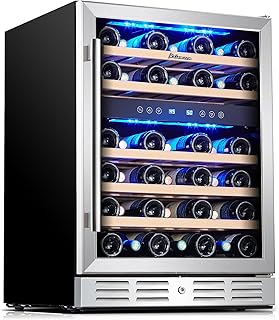
Zephyr Presrv PRW24C02CG Dual Zone Wine Fridge 45 Bottle
A dual zone Zephyr wine cooler with wood racks, a lock and a reversible door for home bars. The spec sheet conflicts on cooling type and installation, so confirm venting before building it in.
Zephyr Brisas 24 Inch Single Zone Wine and Beverage Fridge
A well-built undercounter beverage cooler for ADA-height counters, mixing a few wine bottles with a large stock of cans. Bottle space is limited, and the temperature range is not listed.
Reviewers who got a quiet unit rate it highly for build quality and shelf design, but noise complaints from other buyers and at least one report of unresponsive customer service are worth weighing before buying.
A panel ready dual zone wine cooler for a cabinet run where the door should match the kitchen. Plan for the wood front separately, since the listing says the panel is not included.
A quiet thermoelectric cooler with a locking glass door for a small wine collection in a narrow footprint. The listing gives no temperature range, so serving targets cannot be confirmed.
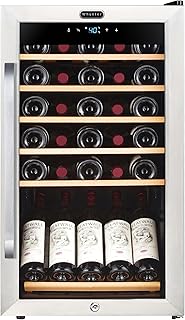
A slim freestanding wine fridge for a small collection in a tight spot, with compressor cooling and a lock. It runs a single zone and is not meant for cabinetry, so plan placement before buying.
Kalamera KRC-150DZB Dual Zone Wine Cooler 37 Bottle
A dual zone wine cooler that can be built in or stand alone, with two temperature sections in one cabinet. The listing gives conflicting bottle counts and no temperature range, so confirm both before planning a collection.
A quiet, capacity-efficient wine cooler for a small space, as long as the room around it stays below roughly 85F so the thermoelectric cooling can keep up.
A compact, quiet cooler for a small everyday bottle rotation, worth placing carefully since it needs airflow clearance and a cool room to hit its lowest setting.
A slim, lockable cooler for a modest bottle collection in a narrow gap. Every bottle shares one temperature, so anyone who wants reds and whites stored apart should look elsewhere.
A well-reviewed dual zone cooler for the price, with genuinely useful independent temperature zones, though a meaningful minority report compressor failures and slow warranty support.
Wine Enthusiast MAX Dual Zone Wine Cooler 32 Bottle
Model: 91503
A dual-zone freestanding wine cooler with compressor cooling and a 32-bottle capacity, a reasonable fit for anyone storing both reds and whites who wants separate temperature control in one appliance.
A compressor cooled cabinet with wood shelves, a locking glass door and a built-in rating, suited to a cabinet cutout. The listing gives no temperature range and no mention of a second zone.
One of the quieter small wine coolers reviewers have used, holding its 46 to 65 F range steadily as long as it stays near room temperature; a sound choice for everyday bottle storage rather than serious cellaring.
Reviewers generally like the slim fit and quiet running, though one buyer's experience with shipping damage and a lower zone that plateaued well above its setting is worth factoring in.
A compact single zone wine cooler with a lockable glass door, suited to a kitchen corner or home bar. Reds and whites share one temperature, and the listed cabinet measurements look wrong, so confirm them with Danby.
What are the most popular freestanding wine cellars brands?
NutriChef, Koolatron, BODEGA, Wine Enthusiast, Zephyr lead this category among the 25 brands that passed our curation checks.
How does ProductDome pick these freestanding wine cellars?
A listing appears only when it has a recorded price, a minimum customer rating, and enough ratings or monthly sales. Generic and unbranded listings are left out, while every real brand stays, including brands sold only on Amazon. The ones that pass are ordered by how many people search for that brand and model each month; review counts only break ties.
About freestanding wine cellars
Freestanding wine cellars come in compact and taller cabinets, with different demands on floor space and vertical clearance. Choose around your bottle sizes and planned collection first. If you intend to enclose the appliance in cabinetry, look at Built-In Wine Cellars instead: a freestanding model needs the installation arrangement specified in its manual.
Plan for your largest expected collection, including overlap between deliveries and bottles already stored. Among the 31 products that list refrigerator net capacity, most fall between 0.9 and 5.7 cubic feet, and 2.9 cubic feet is typical. Interior volume helps compare storage space, but it cannot tell you how your collection will fit. Judge capacity against the bottles you actually buy, including wider sparkling-wine bottles and longer bottles that may disrupt a regular shelf layout. Advertised bottle capacity depends on the bottle shape and loading arrangement used for that figure; look for a shelf diagram or stated reference bottle. Removable shelves can accommodate bulky bottles, but taking shelves out may reduce the usable bottle count.
Temperature zones matter next: a single zone suits bottles kept at a shared storage temperature, while independently controlled zones can accommodate different serving temperatures. For a divided cabinet, compare each zone's permitted settings and bottle allocation with the wine you plan to put there; some models restrict which zone can run colder. The room also matters, so compare its seasonal temperatures with the appliance's stated operating limits, particularly for an unheated garage or warm utility room. For a cellar beside a dining or living area, look for information about compressor and fan noise, including whether fans run continuously.
Before buying, compare the cabinet dimensions, required ventilation gaps and door-opening clearance with the intended location. Allow enough door travel to pull shelves out past the door or hinge. The door filter's Glass and Stainless Steel values need closer inspection: establish which door components they describe and whether any glazing has documented light protection. For defrosting and cleaning, read the appliance's manual for drainage arrangements and any required shutdown procedure; the defrost filter alone cannot tell you which maintenance steps the cabinet requires.
How we list products: every listing here has a recorded price, a minimum customer rating and enough ratings or monthly sales. Generic and unbranded listings are left out; every real brand stays, including brands sold only on Amazon. Products are ordered by monthly searches for their brand and model on every page.Editorial policy
Cookie settings
We use necessary cookies to keep the site working. Page views are counted without cookies. With your permission, we also use functional and marketing cookies. Cookie Policy.


 Best Overall