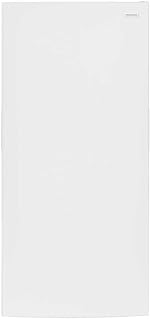
Upright freezers come in compact and full-height formats: compact cabinets can fit smaller spaces, while taller models generally offer more storage, though you should check whether their upper shelves are comfortably accessible. Unlike chest freezers, they need space in front for the door to swing and drawers to pull out, where fitted, rather than clearance for a lifting lid.
Base capacity on your usual stock of frozen food plus the extra space needed after a bulk shop or batch-cooking session. Among the 24 products that list capacity, most fall between 1.6 and 20 cubic feet, and 7 cubic feet is typical. Packaged meals, whole joints and loose bags use the interior differently, so compare usable shelf and drawer dimensions with the containers you actually store. Start with the number of shelves filter to narrow the available configurations, then check shelf spacing and whether shelves can be repositioned, removed, or neither. If you plan to store bulky items in drawer compartments, establish whether the drawers can be removed during normal use. The stated volume does not tell you whether a large tray will fit through the opening or sit flat inside.
Defrosting method determines how you deal with ice buildup. A manual-defrost freezer needs periodic thawing, which means arranging somewhere to keep its contents frozen and checking how defrost water is collected; a frost-free model avoids that routine task. For either type, tightly sealed packaging helps limit moisture loss from stored food. Check whether controls are inside or outside the cabinet and, if a temperature display is fitted, whether it shows the measured temperature or the selected setting. If the freezer will stand somewhere you rarely visit, look for a high-temperature alarm and establish how it alerts you, since an audible warning may go unheard behind a closed door.
Before buying, compare cabinet dimensions and required ventilation clearances with the available space; for an undercounter position, check that the manufacturer’s installation instructions permit the proposed setup. Confirm the permitted room-temperature range before placing the freezer in a garage, and check its electrical requirements against the intended supply. Installation drawings should show the actual hinge arrangement and opening angle needed to withdraw drawers, where fitted. If reversing the door requires a kit, establish whether it is supplied or sold separately. For upkeep, check whether replacement door seals and drawers are available.
How we list products: every listing here has a recorded price, a minimum customer rating and enough ratings or monthly sales. Generic and unbranded listings are left out; every real brand stays, including brands sold only on Amazon. Products are ordered by monthly searches for their brand and model on every page.Editorial policy


 Best Overall