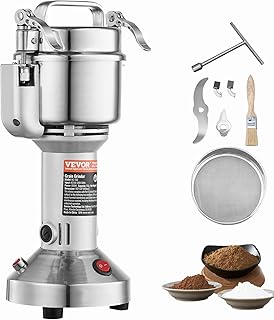
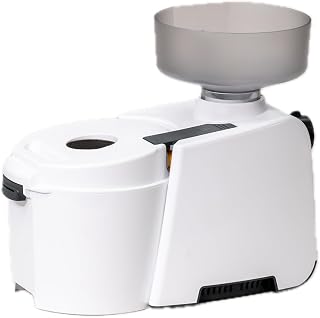
Grain mills use burrs that grind between surfaces, impact mechanisms that pulverize grain, or blades that chop grain inside a chamber; burr mills often offer coarse meal through fine flour, while impact mills generally focus on flour and blade mills can leave uneven particles. First decide whether you want hand operation for occasional small batches or electric operation for regular flour making. If you intend to process soaked grain into batter, look at Wet Grinders: a grain mill needs explicit approval for wet ingredients.
With a hand mill, compare the maker’s guidance for your grain and desired fineness with the quantity you expect to grind, since finer settings can increase cranking effort. For an electric mill, motor wattage is worth checking, but it cannot tell you how much usable flour the machine produces in a session. Among the 15 products that list wattage, most fall between 1,320 and 3,360 watts, and 2,000 watts is typical.. Compare advertised output with the quantity you need for a baking session, accounting for the manual’s limits on continuous running and required cooling pauses. Grain hardness and the selected grind can change throughput, so the stated output needs conditions that resemble your intended use.
Some mills accept dry cereals but exclude oily seeds or nuts that can coat or clog the grinding surfaces, so find explicit guidance for every ingredient you plan to mill. Then match the adjustment range to your recipes: coarse porridge meal and fine baking flour require different results, and a flour-focused machine may lack a useful coarse setting. For a blade chamber, look for instructions on achieving the required texture, including whether sifting and regrinding are needed.
Before buying, confirm the mounting arrangement and working clearance: a clamp-mounted hand mill needs a suitable counter edge and room for its handle to turn, while a hopper-fed machine needs access above for pouring grain. For electric models, verify the required supply voltage. Establish whether the flour receiver is supplied or sold separately. A Stainless Steel or Cast iron with spray coating description may refer to the housing, grinding surfaces or another component, so identify the grain-contact parts in the listing. Cleaning instructions should specify which parts can be removed and whether water is permitted. For mills with replaceable burrs, seals or dust filters, confirm that replacements are available for the exact model.
How we list products: every listing here has a recorded price, a minimum customer rating and enough ratings or monthly sales. Generic and unbranded listings are left out; every real brand stays, including brands sold only on Amazon. Products are ordered by monthly searches for their brand and model on every page.Editorial policy