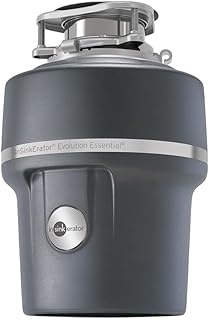
Continuous-feed garbage disposals let you add scraps while the motor runs; batch-feed models require a stopper to activate grinding, so you load scraps in separate batches. Choose continuous feed if you want to clear scraps steadily during meal preparation, or batch feed if you prefer operation controlled by inserting the stopper. Before comparing grinding features, decide whether the disposal must fit an existing installation or whether you can accommodate changes to the sink mounting and under-sink layout.
For a replacement, compare the disposal’s dimensions and outlet position with the space beneath your sink and the existing drain connection. A wider housing can crowd storage or filtration equipment, while a different outlet height may require plumbing changes. Among the 23 products that list weight, most fall between 7.5 and 20 pounds, and 14 pounds is typical. Weight matters when lifting the unit into place and assessing the support required at the sink; it cannot tell you whether the housing will fit. Check the manufacturer’s sink and mounting requirements, especially for a thin sink or an unusual sink opening. An existing mounting assembly may be reusable, but compatibility needs to be stated for the replacement; otherwise, establish whether a suitable mounting kit is supplied or sold separately.
Match motor power and grinding design to the amount of permitted food waste you usually clear at a time. Frequent meal preparation and larger loads justify comparing models intended for heavier use, but higher power does not make every scrap suitable for grinding. For a kitchen open to a living area, look for sound insulation around the grinding chamber and vibration control at the mounting connection; motor power alone cannot predict noise. Jam-clearing access also matters: compare whether the design offers an accessible manual release, automatic reversing, or another stated clearing method before choosing a unit that will sit behind crowded pipework.
Before buying, establish whether the unit requires hardwiring or a plug connection, and whether its cord and required operating switch are included. If connecting a dishwasher, confirm that the disposal accepts its drain hose and follow the instructions for opening the inlet. For a septic system, confirm permitted use with both the disposal manufacturer and your system’s guidance. Read the food restrictions and required water-running instructions. A Stainless steel or Plastic material filter does not identify which components it describes, so inspect the grinding-component specifications. Finish by checking how the splash guard is cleaned, whether it is removable, and whether replacement guards and any required activation stopper are available.
How we list products: every listing here has a recorded price, a minimum customer rating and enough ratings or monthly sales. Generic and unbranded listings are left out; every real brand stays, including brands sold only on Amazon. Products are ordered by monthly searches for their brand and model on every page.Editorial policy


 Best Overall