As an Amazon Associate I earn from qualifying purchases. ProductDome earns a commission when you buy through links on this page.
Best Overall
On-Dash Cameras
ROVE R2-4K Dual Dash Cam
A front-and-rear dash cam built around a strong low-light sensor and GPS logging, with the caveat that its 4K front footage is upscaled from 2.5K, not native.
A capable 4-camera system for full coverage if you accept the cigarette-lighter power requirement and budget for the separate hardwire kit for parking mode.
A screen-free 4K front dash cam that ships with a 32GB card included, built for drivers who want accident-dispute footage without adding extra accessories.
A strong option for drivers who want a discreet front camera with clear plate detail at night and phone access. It records forward only, and parking modes need a hardwire kit bought separately.
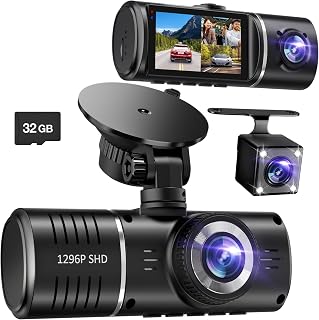
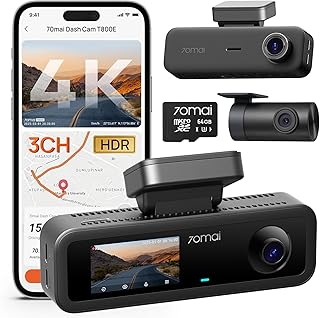
A capable front and rear recorder for drivers who want clear low light footage, GPS data and phone access over Wi-Fi. Parking mode wiring and a memory card are not in the box.
Solid for all-around coverage with four synced cameras and a card included, but budget for the ACC kit and GPS logger separately if you want those features too.
A strong front and rear setup for drivers who want ultra high definition front footage, with a CPL filter already in the box. A memory card and parking mode wiring are extra purchases.
A genuinely compact 1080p dash cam with useful core hardware, but its standout software features require an ongoing Vault subscription rather than coming free with the camera.
A three-camera dash cam for rideshare and family drivers that records the road, the cabin and the rear with voice control and driver alerts. Full parking surveillance needs a separate hardwire kit.
A three camera dash cam that records the road, cabin and rear window, with GPS and a memory card in the box. Full time parking needs a hardwire kit sold separately.
A capable front and rear dash cam with sharp front video, strong low-light optics, GPS and an app for quick clip downloads. Plan on buying a memory card, and a hardwire kit for parking mode.
A two channel dash cam with sharp front video, driver alerts and GPS speed logging in a heat tolerant supercapacitor design. Parking protection needs a separate hardwire kit, and the listing contradicts itself about the memory card.
A three camera dash cam that records the road ahead, behind and the cabin, built with ride share drivers in mind. Parking modes need a separately bought hardwire kit, and no memory card is included.
A strong choice for a commuter who wants sharp front footage and a rear camera with app control. The box list shows no memory card, so add one before the first drive.
A front and rear dash cam with strong night capture, GPS and voice control for drivers who want evidence ready to send from a phone. Round the clock parking mode needs a hardwire kit bought separately.
These 10 on-dash cameras have the highest ProductDome scores among the established products in this category, meaning ones with a large volume of owner ratings and strong evidence; on a tie, the product with more rating evidence ranks first. The score combines owner satisfaction, rating volume, demand and data quality from public Amazon listings (updated 3 days ago). We do not test products ourselves.
Viofo, 70mai, Vantrue, Redtiger, Blackvue lead this category among the 23 brands that passed our curation checks.
How does ProductDome pick these on-dash cameras?
A listing appears only when it has a recorded price, a minimum customer rating, and enough ratings or monthly sales. Generic and unbranded listings are left out, while every real brand stays, including brands sold only on Amazon. The ones that pass are ordered by the ProductDome score, which weighs owner satisfaction, rating volume, demand and data quality.
About on-dash cameras
On-dash cameras come as forward-facing units, systems with a separate rear camera, and setups that also record the cabin. A forward-facing unit covers events ahead; additional cameras can capture a rear impact or activity inside, but bring extra equipment to position and connect. Start by deciding which views you need recorded: a camera aimed into the cabin should not be assumed to provide a usable view of traffic through the rear window.
For each view, judge how much of the scene the camera captures and how clearly it shows the details you need. Among the 20 products that list field of view, most fall between 140 and 189 degrees, and 150 degrees is typical. A wider view can include more adjacent traffic, but vehicles can appear smaller in the image and edges may look distorted. Compare sample footage showing similar road distances and lighting to your usual journeys, especially if identifying registration plates matters. For systems with additional cameras, establish which camera the advertised viewing angle describes and look for footage from each channel. Night footage deserves particular attention because motion, headlights and reflections can obscure details that appear clear in daylight.
Mounting and parked recording can rule out an otherwise suitable setup. Compare the camera and mount dimensions with the available windscreen space behind your mirror, keeping the lens within the area cleared by the wipers and the housing clear of driver-assistance sensors. For a separate rear camera, establish whether it mounts inside the glass or outside the vehicle; an exterior position requires a camera intended for that exposure. If you need recording while parked, confirm the supported recording mode and its power requirements. Some systems require a hardwire kit or separate battery supply, so establish whether that equipment is supplied or sold separately and whether the setup provides protection against draining the vehicle battery.
Before buying, distinguish an included memory card's capacity from the largest card the camera supports; the memory storage capacity filter may need clarification in the listing. Recording duration varies with image settings, compression and the number of active cameras, so compare any advertised duration with your intended recording configuration. Confirm the required card specification, whether loop recording overwrites older footage, and how protected clips are managed when storage fills. The manual should also explain how to export original recordings and whether card formatting must be performed in the camera.
How we list products: every listing here has a recorded price, a minimum customer rating and enough ratings or monthly sales. Generic and unbranded listings are left out; every real brand stays, including brands sold only on Amazon. Products are ordered by the same ProductDome score on every page.Editorial policy
Cookie settings
We use necessary cookies to keep the site working. Page views are counted without cookies. With your permission, we also use functional and marketing cookies. Cookie Policy.

 Best Overall