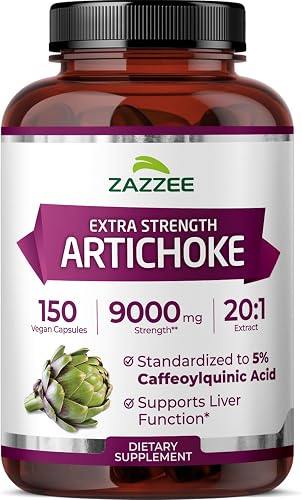
Artichoke supplements are made from extracts of artichoke leaves and are sold as capsules, tablets and liquid extracts, often marketed for digestion and liver support. Research results are limited and mixed, so the first decision is whether to try one, keeping expectations modest and talking to a doctor if you have gallbladder problems or take medicines.
Extract and dose are the next questions. Products vary between standardised leaf extracts with a stated content of active compounds and plain leaf powder. Compare the amount of extract per serving and the number of servings. Among the 7 products that list item weight, most fall between 0 and 0.3 pounds, and 0.2 pounds is typical.
Safety matters. People allergic to plants in the daisy family may react to artichoke, and people with gallstones or bile duct problems should avoid it unless a doctor advises otherwise.
Form and taste come next. Liquid extracts can taste bitter and are mixed into water, while capsules and tablets avoid the taste. Some products combine artichoke with milk thistle, dandelion or other herbs.
Before buying, check the extract type, the dose, the form, the other ingredients and independent testing. Do not use supplements in place of medical advice for digestive or liver symptoms. Artichoke as a vegetable is a different matter from concentrated extracts, and eating it is generally a healthy part of a varied diet. Store supplements in a cool, dry place.
How we list products: every listing here has a recorded price, a minimum customer rating and enough ratings or monthly sales. Generic and unbranded listings are left out; every real brand stays, including brands sold only on Amazon. Products are ordered by the same ProductDome score on every page.Editorial policy