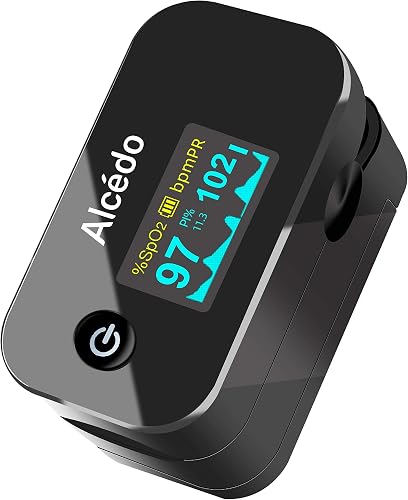
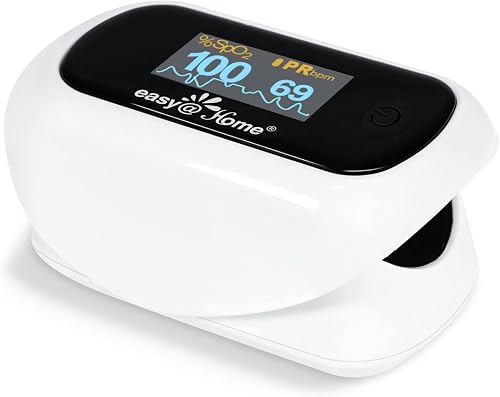
Pulse oximeters clip onto a fingertip and estimate the oxygen saturation of your blood and your pulse rate using light. They are used at home by people with lung and heart conditions, by athletes and climbers, and during illness, often on a doctor's advice. The first decision is whether you need a simple spot check device or one that records readings over time, such as overnight monitoring with an app.
Accuracy is the next question. Home fingertip oximeters give useful estimates but are not as accurate as hospital equipment, and readings can be affected by cold hands, nail polish, movement and skin pigmentation. Look for devices that state their accuracy range, and treat a single unusual reading with care.
Display and comfort matter in daily use. A bright display that rotates is easy to read, and a soft finger chamber fits a range of finger sizes, including children's on some models. Among the 9 products that list battery life, most fall between 23 and 4,675 hours, and 30 hours is typical.
Before buying, check the display, battery type and life, the measurement range, any app or memory features, and whether a lanyard and case are included. Talk to your doctor about what readings mean for you and when to seek help, and do not rely on an oximeter alone if you feel unwell. Children's models have smaller finger chambers and fun designs.
How we list products: every listing here has a recorded price, a minimum customer rating and enough ratings or monthly sales. Generic and unbranded listings are left out; every real brand stays, including brands sold only on Amazon. Products are ordered by the same ProductDome score on every page.Editorial policy