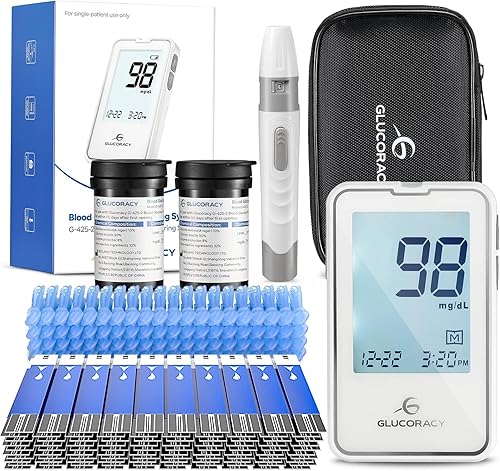
Glucose monitors on this page are home blood glucose meters and kits that measure sugar in a drop of blood, and some connect to a phone app. The first decision is usually made with your doctor or diabetes educator, because the meter decides the test strips you buy for years, and strips are the main ongoing cost.
Strip price and coverage are the next questions. Compare the cost per strip, and check whether your health plan covers the brand. Kits often include a lancing device, lancets and a few strips, but you will need more strips quickly.
Ease of use matters. A clear display, a small sample size and quick results help, and app connected meters log readings automatically and share them with a care team. Among the 6 products that list item weight, most fall between 0.3 and 1.4 pounds, and 0.6 pounds is typical.
Accuracy depends on technique. Wash and dry hands, use strips before their expiry date and store them as directed. Compare readings with lab tests at appointments.
Before buying, check the strip cost, the kit contents, the app features, the battery type and the memory. Follow your care team's guidance on testing frequency and on what to do about readings outside your target range. Continuous glucose monitors, which use a sensor under the skin, are a separate category of devices usually prescribed by a doctor.
How we list products: every listing here has a recorded price, a minimum customer rating and enough ratings or monthly sales. Generic and unbranded listings are left out; every real brand stays, including brands sold only on Amazon. Products are ordered by the same ProductDome score on every page.Editorial policy