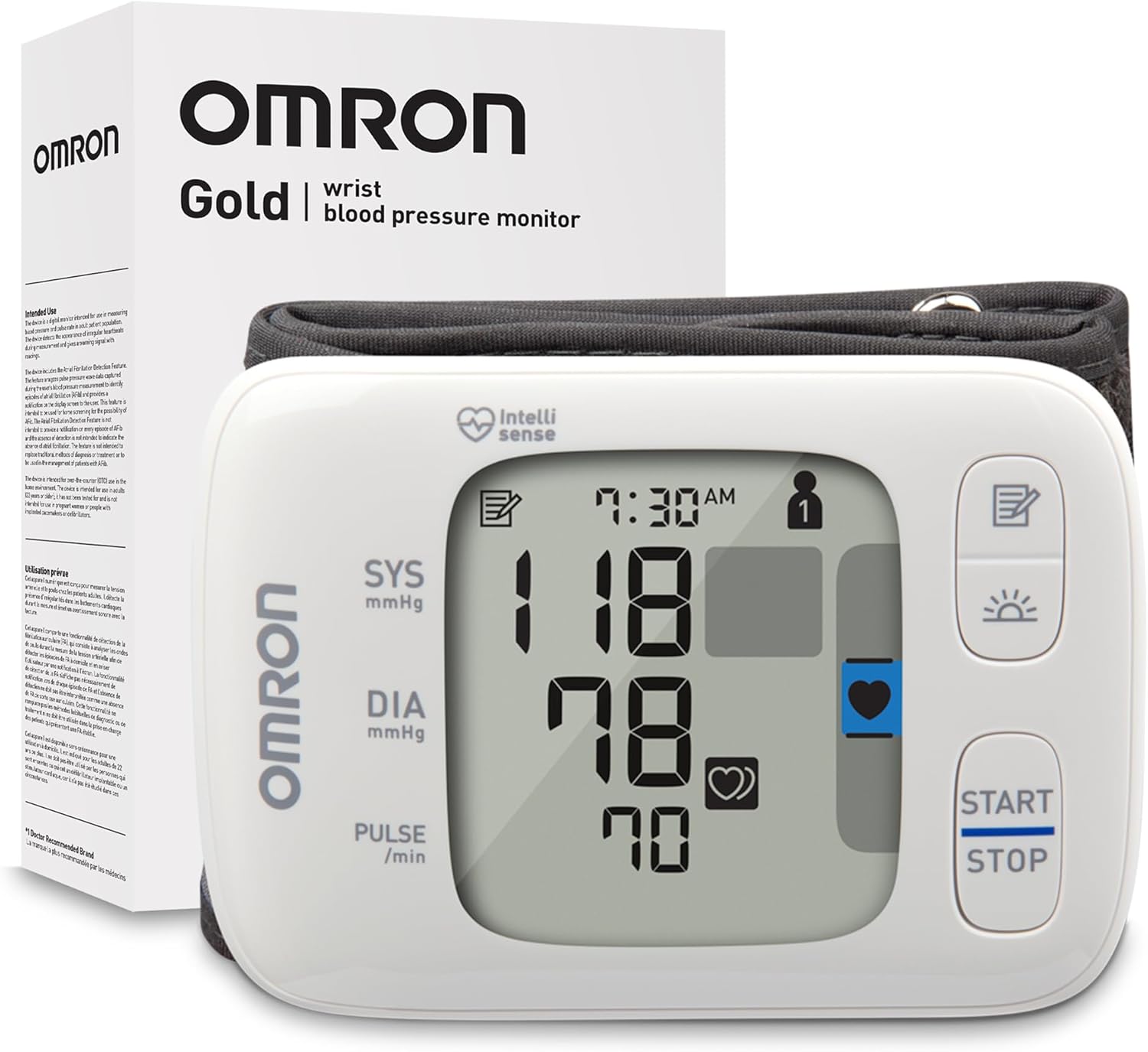
Wrist blood pressure monitors measure blood pressure with a cuff around the wrist, which makes them compact and easy to carry, and they suit people with large upper arms who find arm cuffs uncomfortable. The first decision is whether a wrist monitor is right for you, because many doctors prefer upper arm monitors for accuracy, and wrist readings depend heavily on holding the wrist at heart level.
Accuracy and technique are the next questions. Look for monitors that state they have been clinically validated, and follow the instructions closely: sit quietly, rest the arm on a table and keep the wrist at heart height. Some monitors show a position guide to help.
Display and memory matter in daily use. A large display, memory for several users and averaging of readings make tracking easier, and some monitors connect to an app. Among the 6 products that list weight, most fall between 3.1 and 5.8 ounces, and 3.2 ounces is typical.
Before buying, check the cuff size range, validation, memory, number of users, battery type and case. Compare your monitor with a reading at the doctor's office, and follow your doctor's advice on targets and on what to do about high readings. Wrist monitors fit easily in a bag for travel and work, and a storage case protects the cuff. If readings vary widely, take several readings a few minutes apart and use the average.
How we list products: every listing here has a recorded price, a minimum customer rating and enough ratings or monthly sales. Generic and unbranded listings are left out; every real brand stays, including brands sold only on Amazon. Products are ordered by the same ProductDome score on every page.Editorial policy

 Best Overall