

 Best Overall
Exercise Mats
Manduka PRO Yoga Mat 6mm
A denser, heavier PVC mat built to stay put at home or in a studio rather than travel light in a gym bag.
- Material
- Polyvinyl Chloride
- Item Weight
- 7.5 pounds
- Color
- Black Sage
As an Amazon Associate I earn from qualifying purchases. ProductDome earns a commission when you buy through links on this page.
Best OverallA denser, heavier PVC mat built to stay put at home or in a studio rather than travel light in a gym bag.

A 4.5 rating across 4,500 reviews points to broad satisfaction with this mat's build and feel.
 Popular Pick
A natural rubber Manduka EKO mat in a slimmer build, suited to practitioners who value grip and eco-conscious materials over maximum cushioning.

A cushioned NBR mat suited to home yoga and floor workouts, offering more padding underfoot than a thin PVC mat but with more bulk than a travel-focused option.
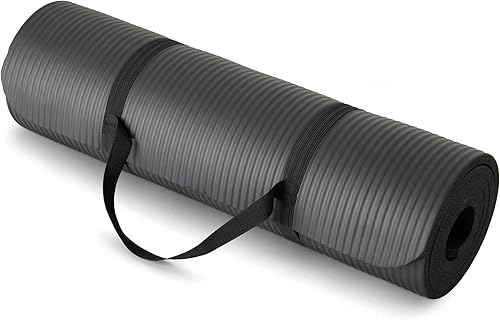
A light, no-frills black NBR foam mat built for everyday floor workouts, easy to carry between rooms though it comes in one color only.

A cushioned, easy-to-transport mat for general floor work, though the exact thickness figure in the listing should be treated with caution.

A cushioned, lightweight purple yoga mat from an established mat brand, built for regular floor practice though its thickness isn't detailed in the listing.

A lightweight PVC yoga-style mat in the Violet Vision colorway, best matched to yoga and stretching rather than high-impact floor training.

A reasonable puzzle-tile flooring set for protecting floors under equipment, sized for roughly 18 square feet.

Two foldable mats sized for real floor coverage, useful when a single mat alone is not enough space.

A thick, cushioned mat built for comfort on hard floors, worth choosing when joint padding matters more than a firm, stable base for balance work.

A firm-but-giving balance pad that matches what several buyers used in physical therapy clinics, though it runs soft for general fitness work.

A PVC yoga and exercise mat in the Lunar Wave print, built for cushioned floor work rather than travel.

A lightweight black foam mat for general floor exercise, useful mainly for the padding it adds under knees, elbows and hips.

Extra cushioning is the whole pitch here, and this mat delivers it for home floor workouts more than it does for portability.

Impact protection for tumbling and martial arts is the job here, not everyday stretching, and the fold-down size makes storage manageable.

A pink vinyl exercise mat weighing 15 pounds, built more solid than typical foam mats for staying in place during floor work.

A light PVC yoga mat in the Pink Marrakesh print, sized for portability rather than heavy cushioning.

A lightweight, well-reviewed TPE mat suited to yoga and general floor work, backed by a high recent purchase volume.


A light, easy-to-carry PVC mat suited to yoga and stretching, with a playful print rather than a plain color.

An eco-friendly TPE mat whose printed alignment marks are the main selling point over a plain mat.

A thicker, wider mat that trades compact rollability for real cushioning and stability, a swap most reviewers considered worthwhile.

A lightweight, grippy mat suited to yoga and floor work, not a cushioned pad for joint-heavy exercise on hard surfaces.
As an Amazon Associate I earn from qualifying purchases.
Manduka PRO Yoga Mat 6mmManduka PROlite Yoga Mat 4.7mmModel PL71Manduka eKO SuperLite Yoga Mat Leaf GreenThese 3 exercise mats are the most searched brands and models among the established products in this category (monthly searches for each brand and model); on a tie, the one with more owner ratings ranks first. Product data comes from public Amazon listings (updated 15 days ago). We do not test products ourselves.
Gaiam, ProsourceFit, BalanceFrom, CAMBIVO, GXMMAT lead this category among the 72 brands that passed our curation checks.
A listing appears only when it has a recorded price, a minimum customer rating, and enough ratings or monthly sales. Generic and unbranded listings are left out, while every real brand stays, including brands sold only on Amazon. The ones that pass are ordered by how many people search for that brand and model each month; review counts only break ties.
Exercise mats come as roll-up mats, folding panels and interlocking tiles: rolls and folding panels can be put away between sessions, while tiles let you assemble a workout area from separate pieces. Start by deciding whether yours needs to travel to classes, come out of a cupboard or stay laid out at home. Exercise Equipment Mats serve a different purpose: a mat intended to protect flooring beneath a machine may not be suitable for stretching, kneeling or other floor exercises.
Among the 17 products that list item weight, most fall between 1 and 14 pounds, and 2.2 pounds is typical. Compare the listed weight with what you are comfortable carrying for your journey, including any walking or stairs. Weight cannot tell you the mat’s dimensions or how much cushioning it provides. Compare its rolled or folded measurements with your cupboard or transport space; folding panels can make a bulky stack, and dismantled tiles still need storage room. If a carry strap or bag would make the trip easier, confirm whether it is supplied or sold separately.
Choose cushioning according to the movements you perform: kneeling and lying exercises need padding that eases pressure at contact points, while standing balance work calls for a surface that does not sink excessively beneath your feet. Thickness alone cannot tell you firmness; if the description is unclear, ask the maker whether the mat is suitable for your balance work or floor exercises. Compare the usable length and width with the space your body occupies during stretches, including sideways movements and fully extended arms. For exercises that involve pushing through your hands or feet, look for guidance on traction when the exercise surface is sweaty; visible texture is insufficient evidence of grip. Check underside grip on your intended flooring too, since the mat itself can slide.
Before buying, confirm that the intended exercises and footwear are permitted, particularly for jumping or workouts in shoes. The maker’s flooring guidance should address any precautions against marking or discoloration of your floor finish. For interlocking tiles, establish whether edge pieces are included and whether they cover the exposed sides of your planned layout. If you have a material preference, use the material filter to select Polyvinyl Chloride or Foam, then read the product’s construction details; neither label tells you how the mat will feel or hold its position during exercise. Consult the cleaning instructions for permitted cleaners, whether soaking is allowed and how the mat must dry before storage.
How we list products: every listing here has a recorded price, a minimum customer rating and enough ratings or monthly sales. Generic and unbranded listings are left out; every real brand stays, including brands sold only on Amazon. Products are ordered by monthly searches for their brand and model on every page.Editorial policy