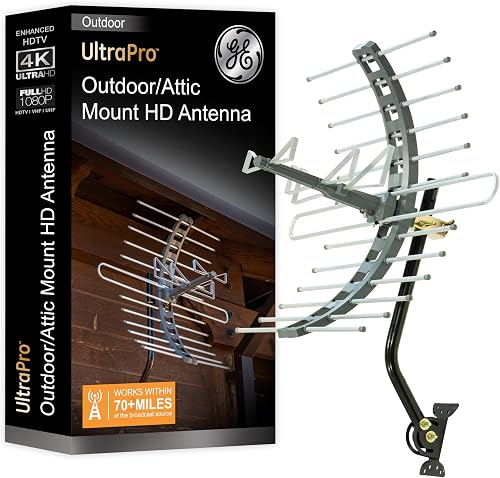
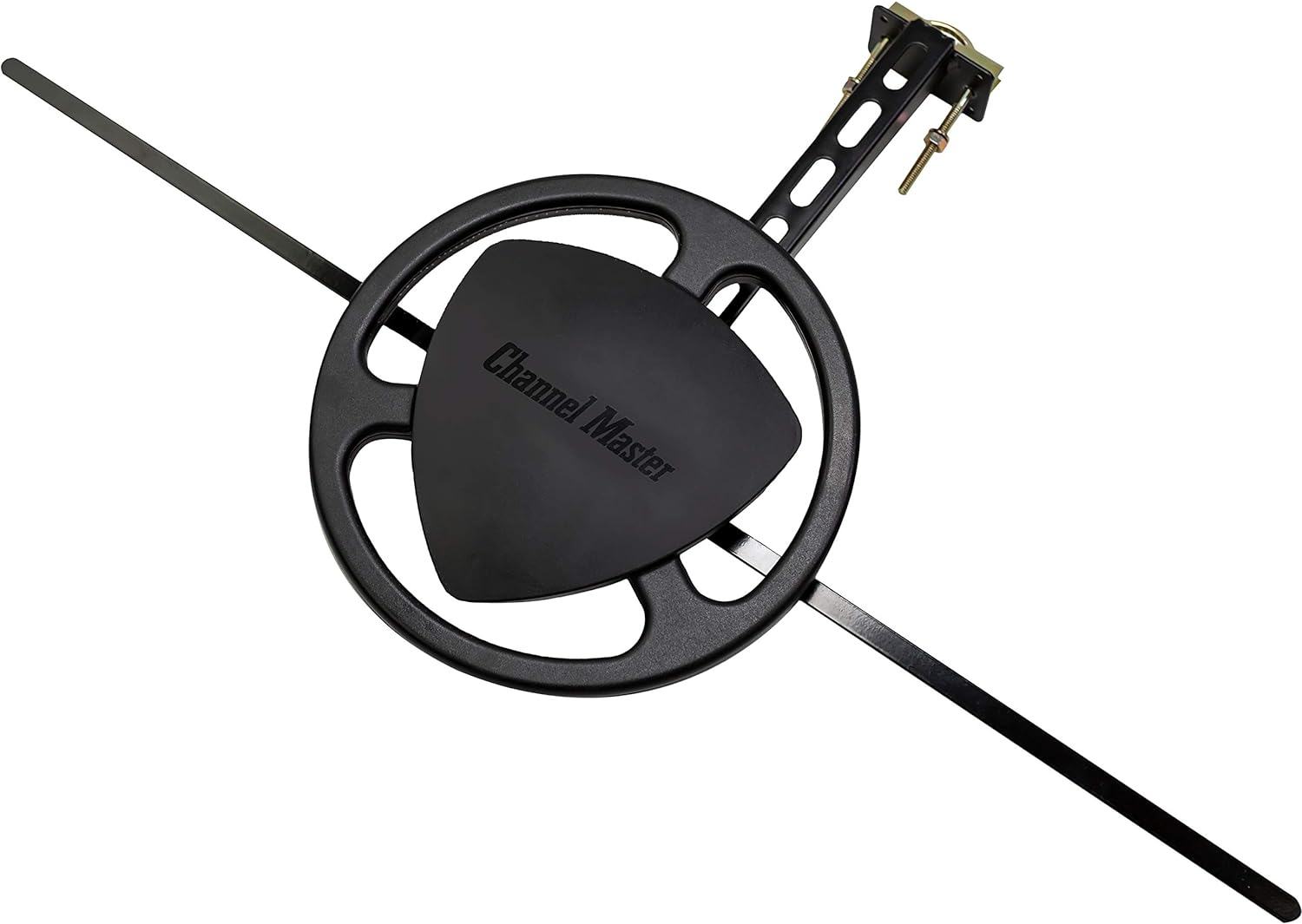
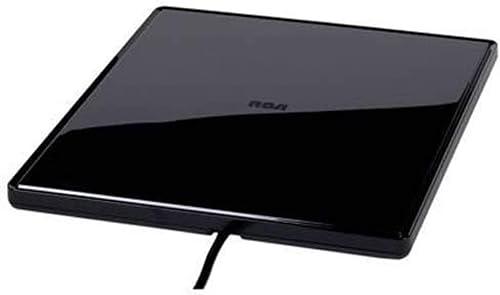
TV antennas come in indoor, attic and outdoor designs: indoor versions are easier to reposition, while attic and outdoor installations can offer better placement but require more mounting work and cable routing. Start by deciding where you can install an antenna with a useful path toward your local broadcast transmitters. If you want terrestrial broadcasts, distinguish these antennas from Satellite TV Equipment, which receives a different service; a Satellite description is a reason to verify the intended signal source before buying.
Choose the installation location using transmitter locations, surrounding obstructions and the mounting options your home permits. Indoor reception can change between windows or rooms, while roofing materials can weaken reception in an attic; an outdoor position may help clear nearby obstructions. Advertised maximum range cannot predict reception at your address because terrain, buildings and antenna height affect the signal. For a fixed installation, antenna weight matters when selecting a suitable support. Among the 14 products that list item weight, most fall between 0.3 and 7.9 pounds, and 1.6 pounds is typical.. Use the antenna’s specified dimensions and mounting requirements to assess clearance and support suitability, since weight cannot tell you its footprint or wind exposure. For an indoor antenna, allow enough cable to try different positions before committing to a mounting point.
Next, match the antenna’s supported broadcast bands to the stations you want: a design that receives one band may miss stations carried on another. Directional antennas suit stations clustered in the same direction, while multidirectional designs can suit transmitters spread around your home; compare the reception pattern with their actual bearings. Amplification is a separate decision. It can help offset losses along a long cable run or through a splitter, but it cannot recover a signal the antenna fails to receive, and strong nearby signals can overload an amplifier. For an amplified design, look for an option to bypass amplification if reception worsens.
Before buying, confirm that your television has a tuner compatible with the intended broadcasts and an antenna input; otherwise, a separate tuner may be needed. Match the antenna’s connection and specified impedance to the receiving equipment. Outdoor installations need suitable weather protection and must follow the manual’s grounding and mounting instructions. Establish whether the package includes the required bracket or mast, coaxial cable, amplifier power supply and any necessary adapters, or whether those parts are sold separately.
How we list products: every listing here has a recorded price, a minimum customer rating and enough ratings or monthly sales. Generic and unbranded listings are left out; every real brand stays, including brands sold only on Amazon. Products are ordered by the same ProductDome score on every page.Editorial policy