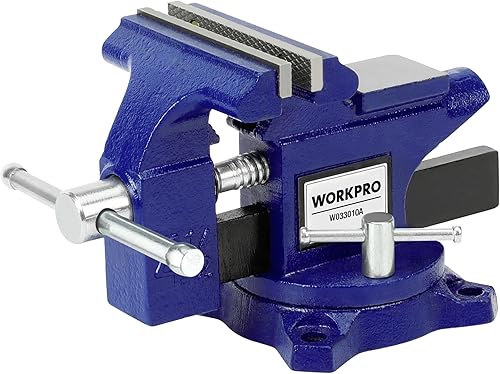
Bench vises clamp work to a bench so you can saw, file, drill and bend it with both hands free. Metalworking vises have hardened steel jaws, an anvil and often a swivel base, while woodworking vises mount flush with the bench edge and use wooden or lined jaws that do not mark timber. Multi purpose vises add pipe jaws below the main jaws. The first decision is the material you work on, because a metalworking vise bruises wood and a woodworking vise is not built for hammering steel.
Jaw width and opening decide what fits. Wider jaws hold larger work steadily, and the maximum opening sets the thickest piece you can clamp. Among the 5 products that list item weight, most fall between 8.2 and 49 pounds, and 11 pounds is typical. Heavier vises made from ductile or forged iron take hammer blows and heavy clamping without cracking, while light cast vises suit hobby work. A swivel base lets you turn the work to a comfortable angle, and a lock keeps it from moving under load.
Mounting is the next question. A bench vise needs a solid bench and bolts through the top; clamp on vises are easier to move but hold less firmly. Mount metalworking vises so the fixed jaw sits just past the bench edge, so long pieces hang down clear of the bench.
Before buying, check the jaw width, the maximum opening, the throat depth, the body material, whether jaw pads are included, and the bolt pattern for mounting. Replaceable jaw faces extend the vise's life, and soft jaw covers protect finished parts. Grease the screw now and then and keep filings out of the slide.
How we list products: every listing here has a recorded price, a minimum customer rating and enough ratings or monthly sales. Generic and unbranded listings are left out; every real brand stays, including brands sold only on Amazon. Products are ordered by monthly searches for their brand and model on every page.Editorial policy