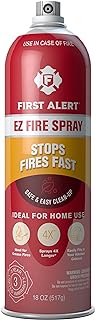
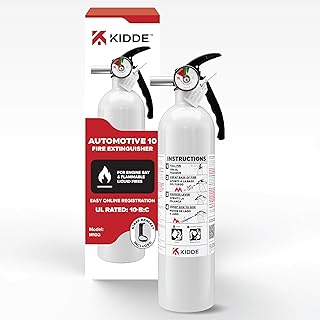
Fire extinguishers come with different extinguishing agents, including dry chemical, water, foam and carbon dioxide, and their permitted uses depend on the fires they are designed to tackle. Start with the hazards where the extinguisher will be kept: ordinary combustible materials, flammable liquids, energized electrical equipment and cooking oils need appropriate coverage on the label. A general household extinguisher should not be assumed suitable for a deep cooking oil fire; look for explicit approval for that use. Plan for use on a small, contained fire with a clear escape route, since an extinguisher is no substitute for getting out when conditions become unsafe.
Once the fire coverage fits, decide what you can comfortably lift, carry and aim. Among the 20 products that list item weight, most fall between 1 and 9.5 pounds, and 3.6 pounds is typical.. The listed item weight may describe the extinguisher or a packaged shipment, so confirm the charged operating weight before judging manageability. A heavier unit can be harder to control while operating its handle, particularly for someone with limited grip strength. Compare the labeled fire rating as well as weight: weight alone cannot tell you how much fire an extinguisher can tackle. For a cupboard or vehicle compartment, use the cylinder dimensions and the space needed to grasp and remove it, rather than inferring size from weight.
Discharge behavior, cleanup and servicing separate otherwise suitable choices. Compare the stated discharge duration and reach with the manual’s operating guidance; temperature, charge condition and operation can affect performance. Around electrical equipment, dry chemical residue can create substantial cleanup work, while carbon dioxide leaves no extinguishing-agent residue but has ventilation and confined-space restrictions that need attention. Rechargeable models need access to a suitable service provider after discharge; disposable models require replacement after use. Choose between them according to whether local servicing is practical, and include that upkeep in the decision.
Before buying, confirm that the permitted storage temperatures suit the intended location, especially a vehicle or unheated outbuilding. For wall or vehicle mounting, establish whether the appropriate bracket and fasteners are supplied or sold separately. Cylinder color cannot tell you fire coverage or suitability. The manual should explain how to inspect readiness, including the pressure indicator where fitted, and specify servicing or replacement requirements; confirm that any stated replacement date leaves a useful period of ownership.
How we list products: every listing here has a recorded price, a minimum customer rating and enough ratings or monthly sales. Generic and unbranded listings are left out; every real brand stays, including brands sold only on Amazon. Products are ordered by monthly searches for their brand and model on every page.Editorial policy


 Best Overall