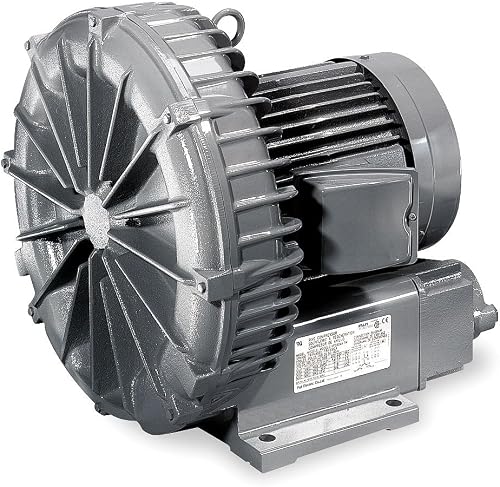
Regenerative Blowers
Fuji Electric Regenerative Blower 2.3 HP
Model: VFC508P-2T- Item Weight
- 100 pounds
 USUnited States
As an Amazon Associate I earn from qualifying purchases. ProductDome earns a commission when you buy through links on this page.


The wide 220-480V range makes wiring flexible, but the single one-star rating on record deserves a look before it goes into anything mission-critical.


A single-phase option with real pressure capacity for tougher duct runs, though its only review on record is a single star with no explanation given.

With no spec sheet or written reviews to go on, this listing fits a targeted replacement purchase more than a first-time comparison shop.

A standard-power entry in the Gast lineup, most useful where running a dedicated three-phase circuit simply is not practical for the installation.

A close sibling to the R3105-12 in Gast's standard-voltage line, worth it when the R2103 NX specifically is what the application calls for.

There isn't enough published data here to recommend or size this blower with confidence. Confirm airflow, pressure and voltage specs with the seller before buying.

A dependable three-phase pick from an established industrial blower maker, worth choosing when the 74-92 cfm range across 50/60 Hz matches the application.
As an Amazon Associate I earn from qualifying purchases.
Gast, VFC200P-5T, Fuji, 1.1, Whirlwind lead this category among the 9 brands that passed our curation checks.
A listing appears only when it has a recorded price, a minimum customer rating, and enough ratings or monthly sales. Generic and unbranded listings are left out, while every real brand stays, including brands sold only on Amazon. The ones that pass are ordered by the ProductDome score, which weighs owner satisfaction, rating volume, demand and data quality.
Regenerative blowers, also called side channel blowers, move large volumes of air at low to moderate pressure or vacuum with a non contact impeller, so they run with little wear and no oil in the airstream. They are used for pond and septic aeration, hot tubs, dust and chip extraction, vacuum hold down tables, drying and pneumatic conveying. The first decision is whether you need pressure, vacuum or both, because blowers are rated separately for each and some are built for continuous duty in one mode.
Air flow and pressure must be matched to the system. Among the 5 products that list air flow capacity, most fall between 55 and 152 cfm, and 71 cfm is typical. Every blower has a curve: as the back pressure or vacuum rises, the air flow falls. Compare the flow your system needs at its working pressure, not the maximum free air figure, and leave a margin for filters, hoses and fittings that add resistance. A blower that runs close to its pressure limit gets hot and can fail early.
Power and noise come next. Single phase motors suit homes and small shops, while larger blowers often need three phase supply. Noise varies with size and speed; inlet and outlet mufflers reduce it, and placing the blower in a ventilated enclosure helps in quiet areas. Heat builds in the air at higher pressures, which matters for plastic piping.
Before buying, check the flow and pressure or vacuum at your operating point, the motor voltage and phase, the port size, the duty rating, and whether filters, mufflers and a relief valve are included. Install an inlet filter to keep debris out, a relief valve to protect the blower, and check the motor rotation direction on first start.
How we list products: every listing here has a recorded price, a minimum customer rating and enough ratings or monthly sales. Generic and unbranded listings are left out; every real brand stays, including brands sold only on Amazon. Products are ordered by the same ProductDome score on every page.Editorial policy