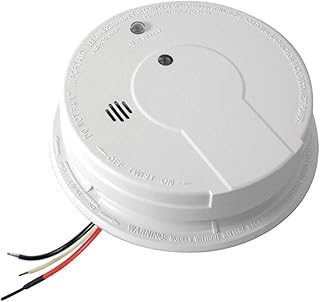
First Alert SC5 Smart Smoke and CO Alarm SMCO600NV-AC
A sound choice for homes that already have hardwired alarms and want phone alerts plus Nest Protect compatibility. It needs an existing alarm circuit, so homes without one should look at a battery model.
A matched set of hardwired ionization alarms with battery backup for covering every bedroom and level. Its sensor targets flaming fires, and Kidde advises adding photoelectric alarms for smoldering ones.
The right choice for a multi-room, wired alarm system where one alarm should trigger all of them. Skip it if the home has no smoke alarm wiring already in place.
A slim, sealed-battery smoke alarm built to reduce cooking nuisance alarms and never need a battery swap, suited to bedrooms and hallways. It detects smoke only, so pair it with separate carbon monoxide protection.
A set-and-forget ionization smoke alarm whose sealed battery removes battery changes for the life of the unit. It senses smoke only with one sensing type, so pair it with a photoelectric alarm as Kidde recommends.
A reasonable pick for anyone who wants one detector installed and forgotten for a decade. Choose the hardwired 20SAR instead if the home already has AC wiring for alarms.
A reliable hardwired smoke alarm for interconnected homes that want a sealed backup battery. One bullet mentions a CO sensor, but the rest of the listing describes a smoke-only unit.
A straightforward hardwired ionization alarm for interconnected home systems and contractor installs. It is tuned toward flaming fires, so pair it with photoelectric alarms for smoldering fire coverage.
A straightforward hardwired photoelectric alarm with battery backup and wide interconnect support, suited to replacing or extending a wired system. Kidde itself advises also installing ionization alarms for flaming fires.
A three-pack of interconnecting hardwired smoke alarms with battery backup and a latching indicator. They sense smoke only and need a hardwired circuit.
An easy, no-wiring smoke alarm pair for living areas, with sealed batteries and photoelectric sensing. It detects smoke only and does not link to other alarms per the listing.
A sensible heat alarm for garages, attics and kitchens where a smoke alarm would false-trigger, and it links into a Kidde alarm network. It senses heat only, so it does not replace smoke alarms elsewhere.
A no-wiring smoke alarm for rooms and apartments where a sealed battery and voice alerts make life easier. It does not interconnect with other alarms according to the listing.
A sensible smoke alarm for homeowners linking several Kidde alarms, with voice alerts, a sealed long-life battery and no late-night chirps. The title calls it wire-free while the specs list it as hardwired, so confirm your install.
A simple battery combination alarm for homes and rentals, with spoken warnings that say whether the danger is fire or carbon monoxide. It does not link to other alarms per the listing.
A smart replacement for hardwired smoke alarms where a sealed backup battery and voice warnings are wanted. Interconnect works only with other Kidde units, and the sensor type is not stated.
Power Source
120V AC hardwired, built-in 10-year battery backup
These 10 smoke detectors & fire alarms are the most searched brands and models among the established products in this category (monthly searches for each brand and model); on a tie, the one with more owner ratings ranks first. Product data comes from public Amazon listings (updated 15 days ago). We do not test products ourselves.
What are the most popular smoke detectors & fire alarms brands?
Kidde, First Alert, X-Sense, Electric, Security Instruments lead this category among the 7 brands that passed our curation checks.
How does ProductDome pick these smoke detectors & fire alarms?
A listing appears only when it has a recorded price, a minimum customer rating, and enough ratings or monthly sales. Generic and unbranded listings are left out, while every real brand stays, including brands sold only on Amazon. The ones that pass are ordered by how many people search for that brand and model each month; review counts only break ties.
About smoke detectors & fire alarms
Battery-powered smoke alarms can be installed without a mains connection, while hardwired alarms need a suitable electrical supply and may include battery backup. Start by deciding whether you are replacing an alarm in an existing wired installation or adding one where no alarm wiring is available, because that determines the installation work involved.
For a hardwired replacement, confirm the required supply and connector against your existing installation; a similar-looking plug is not enough to establish compatibility. For either power format, find out whether the battery is replaceable or sealed inside the alarm. Replaceable batteries require periodic replacement; for sealed batteries, check the manufacturer's instructions for low-battery and end-of-life warnings. Check how a hardwired model operates during a power outage and whether its backup battery is supplied. Among the 15 products that list item weight, most fall between 0.5 and 1.2 pounds, and 0.7 pounds is typical. Weight cannot tell you whether the alarm fits your existing mounting bracket; compare the attachment pattern and use the mounting hardware specified for your wall or ceiling surface.
Next, decide whether alarms need to sound together across separate rooms or floors. Standalone alarms sound locally; interconnected models can relay an alert, but every alarm in the intended network must support the same interconnection system. Wireless interconnection and phone notifications are separate features, so establish which function you need and whether a required hub is supplied or sold separately. If you also need carbon monoxide detection, the listing must explicitly identify that function; smoke detection alone does not cover it. Where occupants may not hear an audible alarm, look for a system that supports an appropriate visual or vibrating alert and establish whether that accessory is included.
Before buying, read the installation instructions for permitted locations, ceiling or wall positioning, and separation from cooking appliances, bathrooms and ventilation outlets. For a garage or another space exposed to temperature extremes, compare its conditions with the alarm’s stated operating limits. The manual should also explain how to test the alarm, clear dust from its openings and distinguish a fault warning from a low-battery warning. Find the replacement interval and how the manufacture date or replacement date is marked on the unit, since replacing a battery does not renew the alarm’s service life.
How we list products: every listing here has a recorded price, a minimum customer rating and enough ratings or monthly sales. Generic and unbranded listings are left out; every real brand stays, including brands sold only on Amazon. Products are ordered by monthly searches for their brand and model on every page.Editorial policy
Cookie settings
We use necessary cookies to keep the site working. Page views are counted without cookies. With your permission, we also use functional and marketing cookies. Cookie Policy.


 Best Overall